PAINTING IS
Happiness Freedom Vision Work Love Beauty Lust Natural
Happiness. Freedom. Vision. Work. Love. Beauty. Pleasure.
Painting has been a part of my life for more than three decades. Yet even today, I still haven’t fully figured out what a painted picture actually is.
A surface? A representation of reality? A thought? A memory? Material? An object? An invention?
Perhaps that is precisely where the power of painting lies: it does not have to answer this question.
It can depict reality and transform it at the same time. It can be concrete and abstract, planned and intuitive, beautiful and unsettling. It can show something—or make visible something that previously had no form.
For me, painting is therefore, above all, a process of searching.
Acrylic Painting
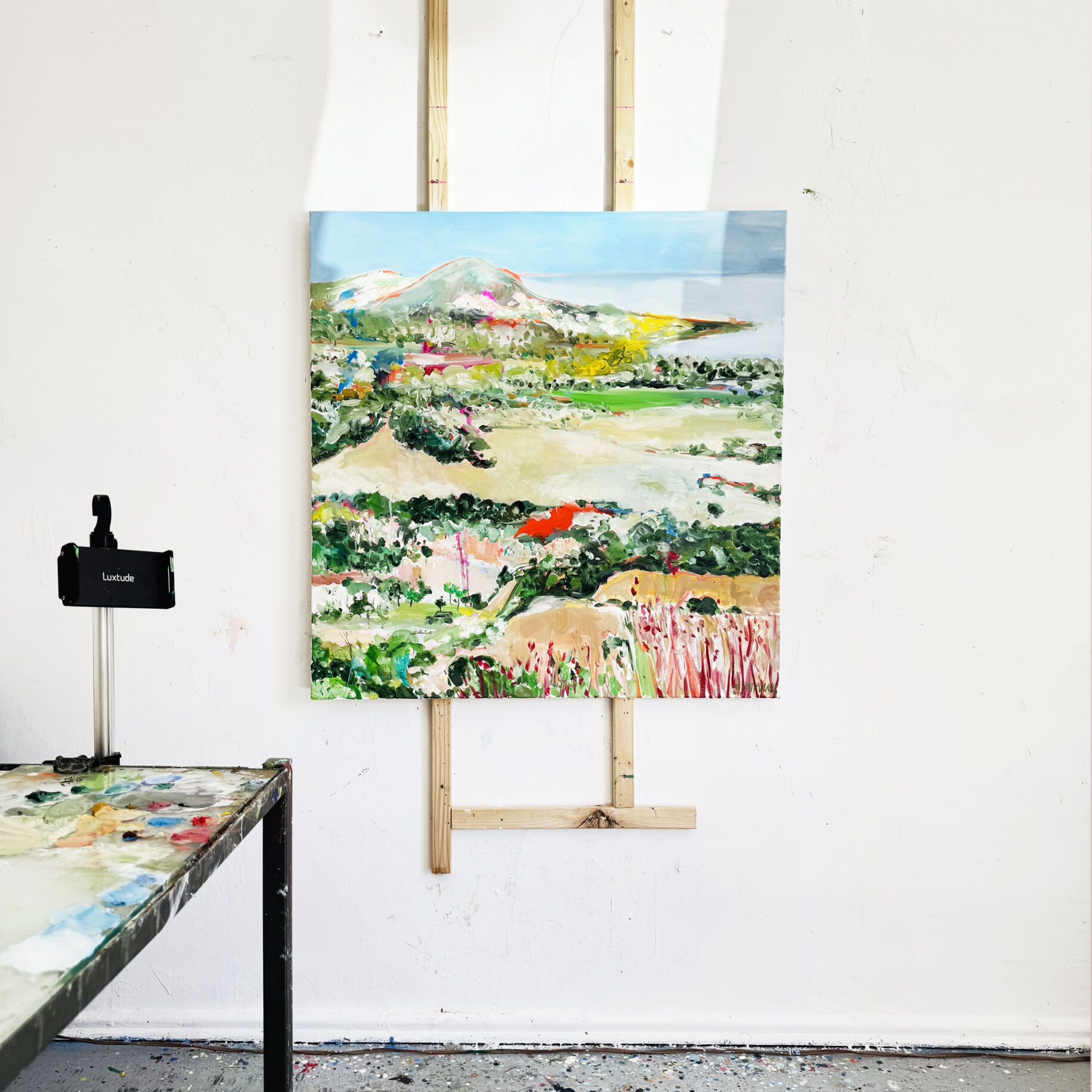
Acrylic allows for an immediate and fast working process. Color, surface, and layering can interact directly with one another and change during the process.
Oil painting
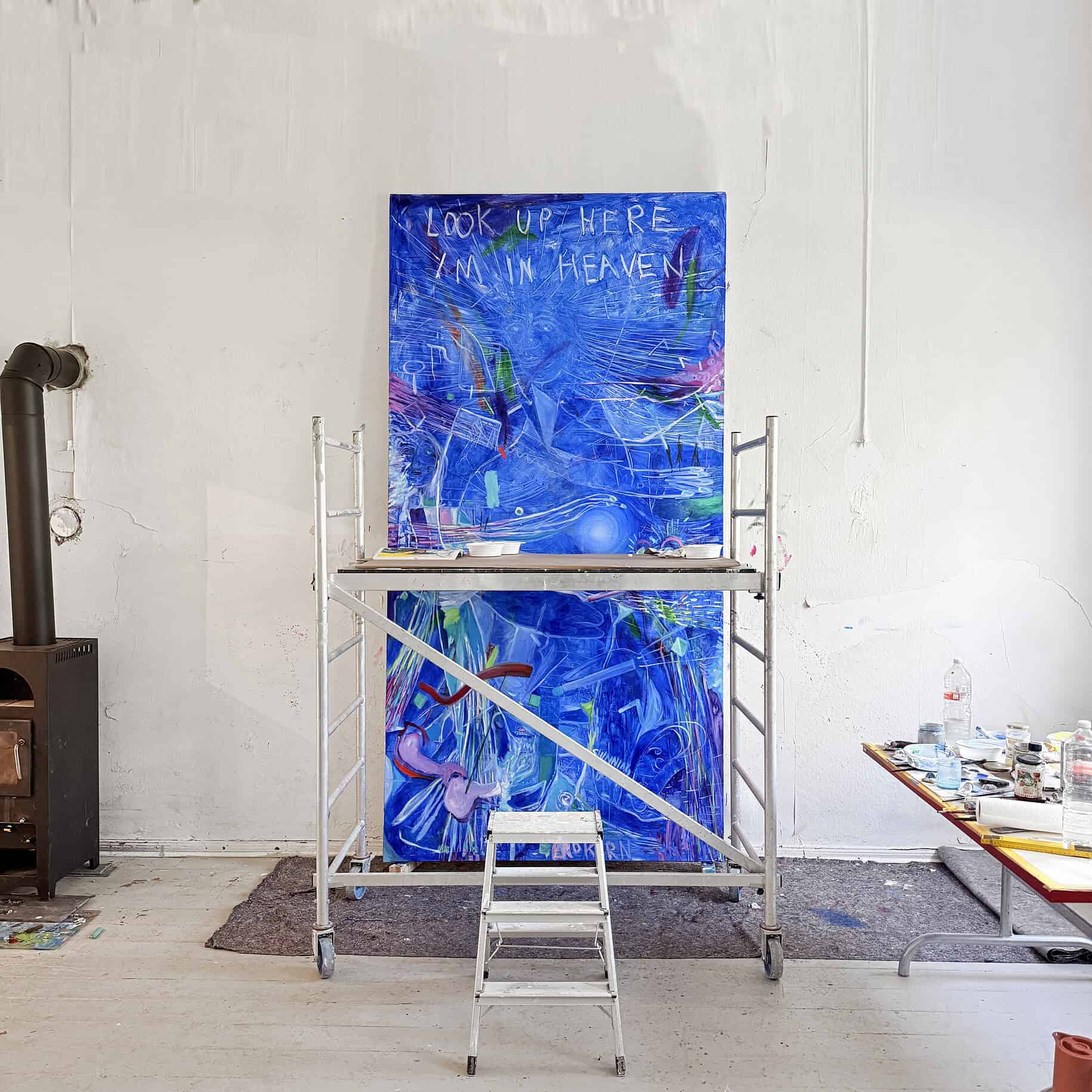
Oil paint allows for depth, transparency, and gradual change. Glazes, impasto layers, and visible brushstrokes can coexist within a single painting.
What is painting?
What is a painted picture? A painted surface? Or a depiction of reality? A trial, an error, and a tentative approach? Or a new system in an old guise, a medium and a sign of perception? A design, an object, a dream, or an alienation? A copy or an original? An invention?
Painting questions perception and is a process. The prerequisite is a process of searching. Each new motif examines new approaches, explores worlds and spaces and creates its own raison d'être. Sometimes it provides answers, often many questions remain. A picture does not always aim to provide answers - the search continues. The image merely serves as a medium in the attempt to depict a new reality.
Works of art
Selected works from various creative periods.
Free-form painting that blends abstraction, figuration, landscape, and cultural references.
Expressionism
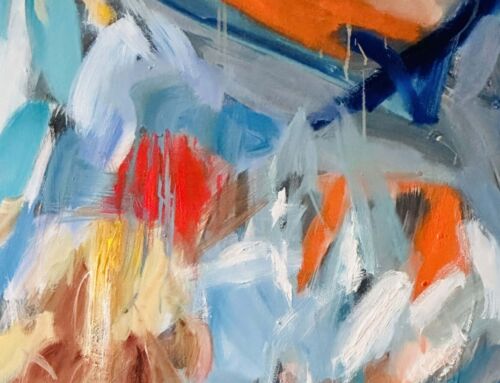
Color, gesture, and spontaneous expression.
Expressive painting in which movement, material, and emotional perception define the pictorial space.

Color Is Material
On a screen, color is light.
In painting, color is matter.
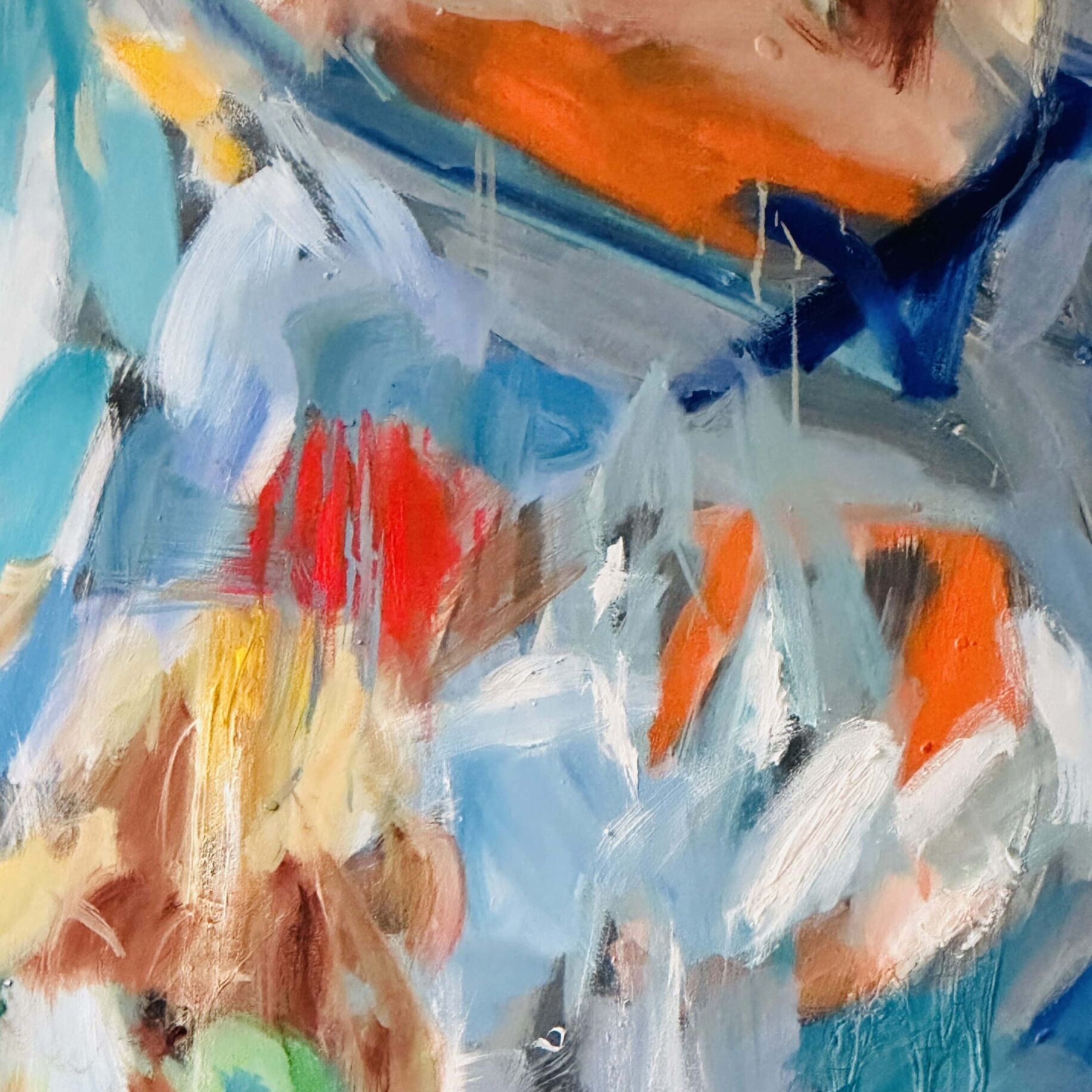
Oil paint has depth, luster, transparency, and body. Acrylic can be immediate, quick, and direct. Thin glazes can coexist with impastoed areas. Traces of the brush, the hand, or the tool remain part of the painting.
I am particularly interested in this physical quality in a world where an ever-increasing proportion of our images are created and viewed digitally.
A painting exists not only as an image.
There is an object in the room.
You can stand in front of it, approach it, or step back. Light changes its surface. Details disappear as you move away, and other connections become visible.
Especially with my large-scale works, this physical experience becomes part of the perception.
Between Abstraction and the Object
I have only a limited interest in the distinction between abstract and representational painting.
Landscapes, buildings, figures, text, or specific cultural references may appear in my work. At the same time, these elements are transformed through color, layering, and gestural brushwork.
A building can become a plane.
A landscape can dissolve.
A word can lose its meaning and function solely as a form.
Abstraction does not necessarily mean the absence of reality. It can be another way of perceiving reality.
IN LOVE – Color and Immediate Experience
IN LOVE, 2026 creates a different kind of landscape—one constructed almost entirely through color. Intense fields of red, pink, and orange surround an almost luminous center. Drawings, writing, and fragmented imagery appear and disappear beneath successive layers of paint.
The words “IN LOVE” remain recognizable while becoming part of the painting itself. Measuring 200 × 300 cm, the work transforms color from a visual element into an almost physical environment.
Painting as an Open System
For many years, I have been working with a wide variety of visual sources and experiences.
Architecture, nature, literature, travel, science, technology, pop culture, economic systems, and personal memories can all come together within a single image.
I'm less interested in their breakup than in what's happening between them.
The painting becomes a space where fragments can form relationships with one another that might not exist outside of painting.
This does not result in self-contained narratives.
Painting remains open-ended.
Painting in the Digital Age
Never before have so many images been produced as today.
Photography, social media, digital image editing, and artificial intelligence have fundamentally changed the way images are created and shared.
To me, that doesn't make painting unnecessary.
On the contrary.
The more intangible our visual world becomes, the more fascinating the physical reality of a painting seems to me: pigment, oil, canvas, surface, size, time, and the traces of its creation.
I myself use digital tools and artificial intelligence in certain parts of my process. For me, therefore, the distinction between analog and digital is not the key issue.
I'm interested in what can emerge between these two worlds.
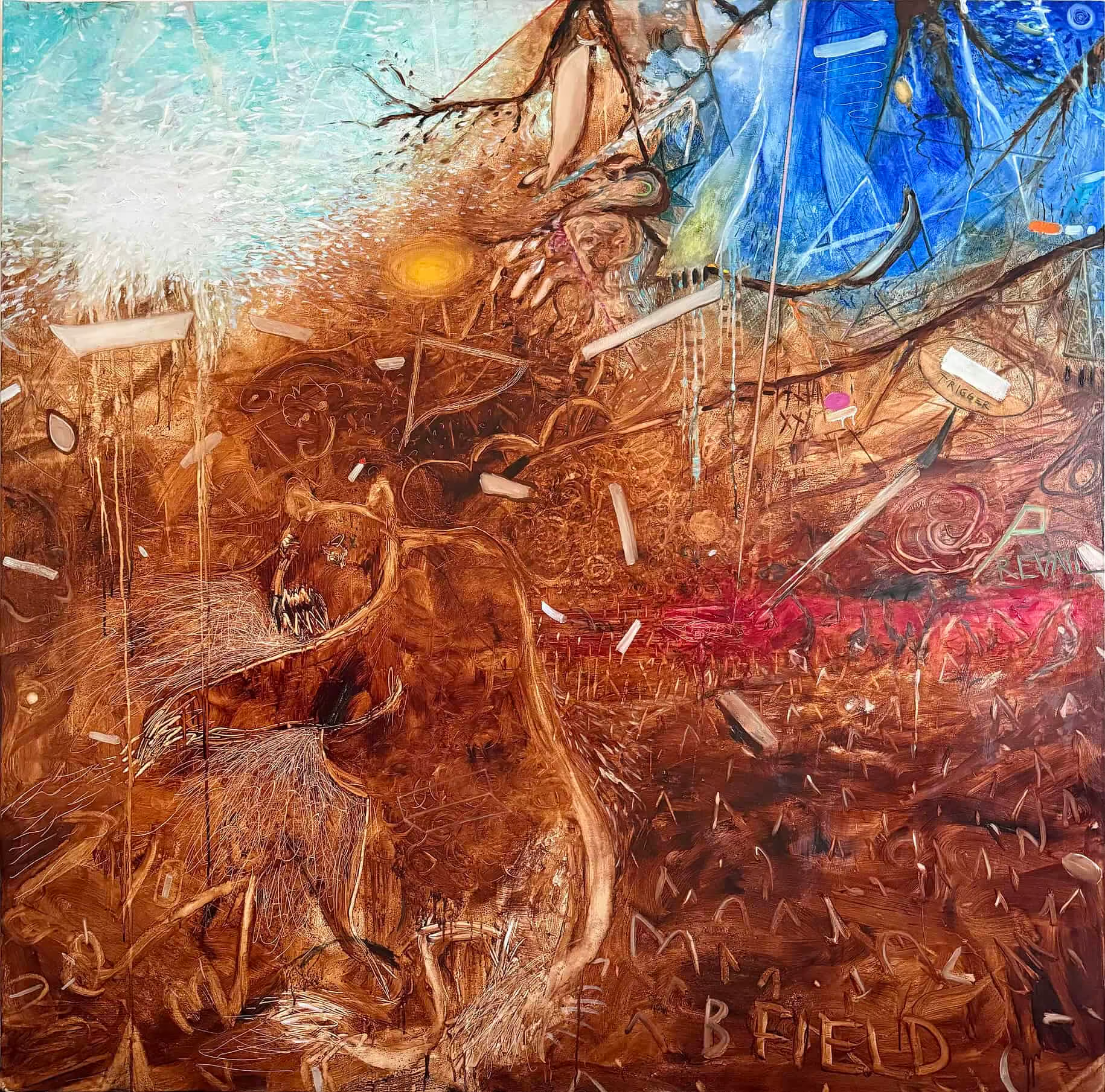
GREAT MOMENTS IN HUMAN HISTORY (2026) – OIL ON CANVAS • 200 × 200 CM
*STERNSTUNDEN DER MENSCHHEIT* weaves together fragments of myth, history, and the present. The title deliberately references Stefan Zweig’s collection of historical miniatures, yet shifts its meaning: rather than celebrating heroic moments, the painting explores the recurring tragedy of human conflicts.
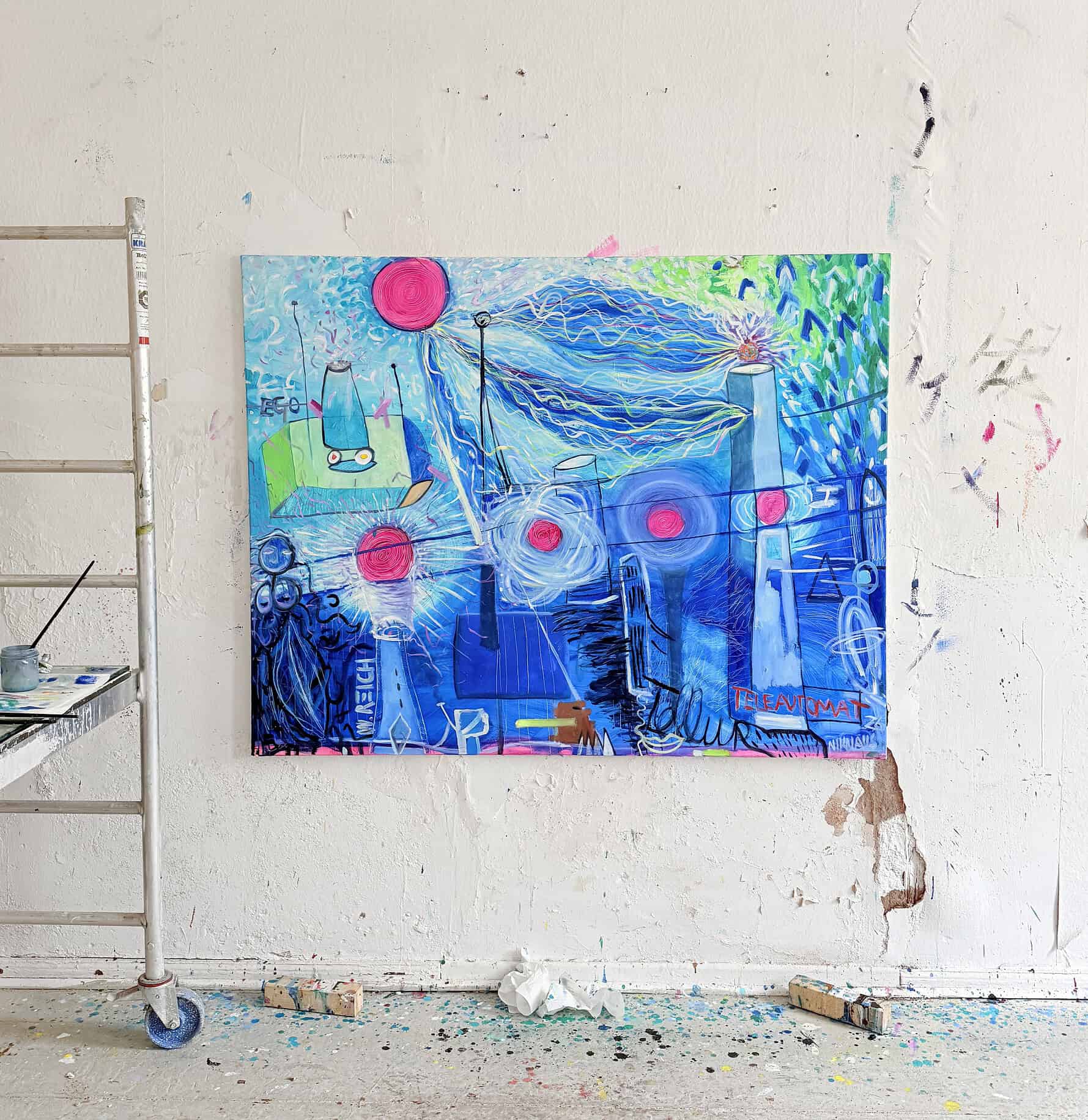
TESLA IS TESLA, NOT TESLA (2026) – OIL ON CANVAS • 160 X 120 CM
"TESLA IS TESLA, NOT TESLA" refers to Nikola Tesla and his conception of energy as an open, almost spiritual force. The painting contrasts this idea with today's technology brands, commercial systems, and contemporary notions of innovation.
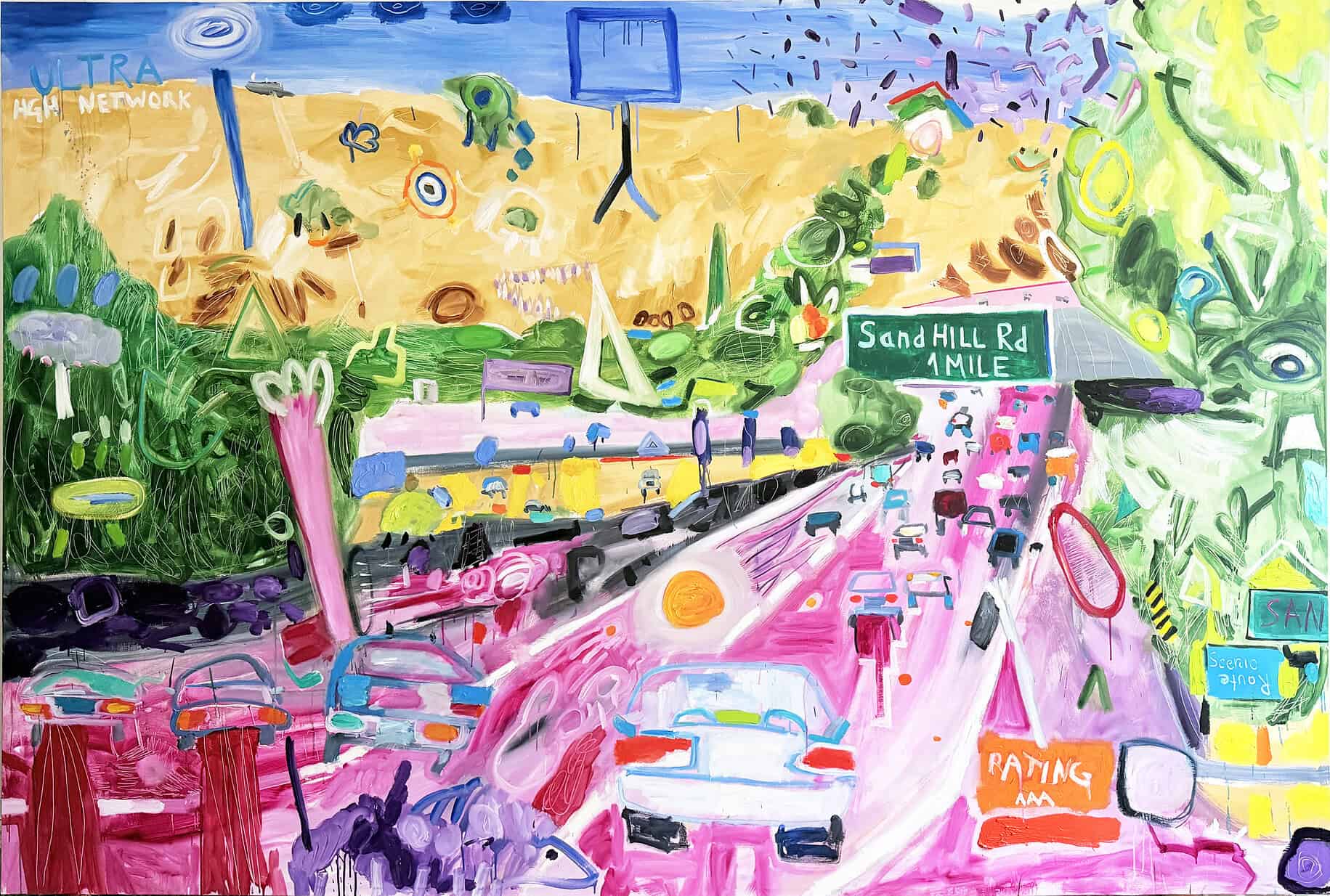
SAND HILL RD 1 MILE (2026) – OIL ON CANVAS • 200 X 300 CM
SAND HILL RD 1 MILE refers to the street in Silicon Valley that, more than almost any other place, symbolizes venture capital, technology, and immense wealth. Hand-painted layers of color, symbols, and fragmented imagery transform capital flows, investments, and networks into an open, almost cosmic landscape.
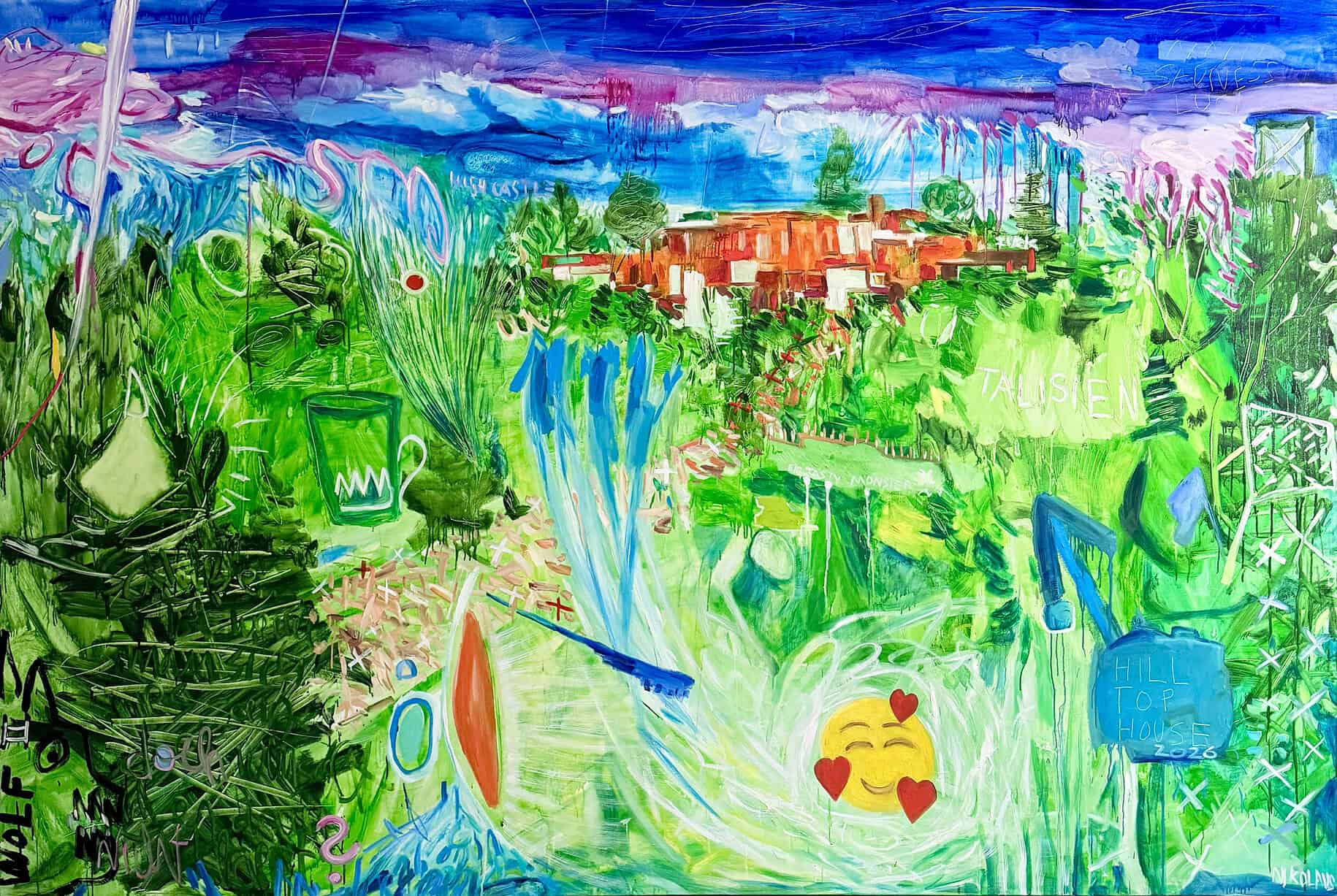
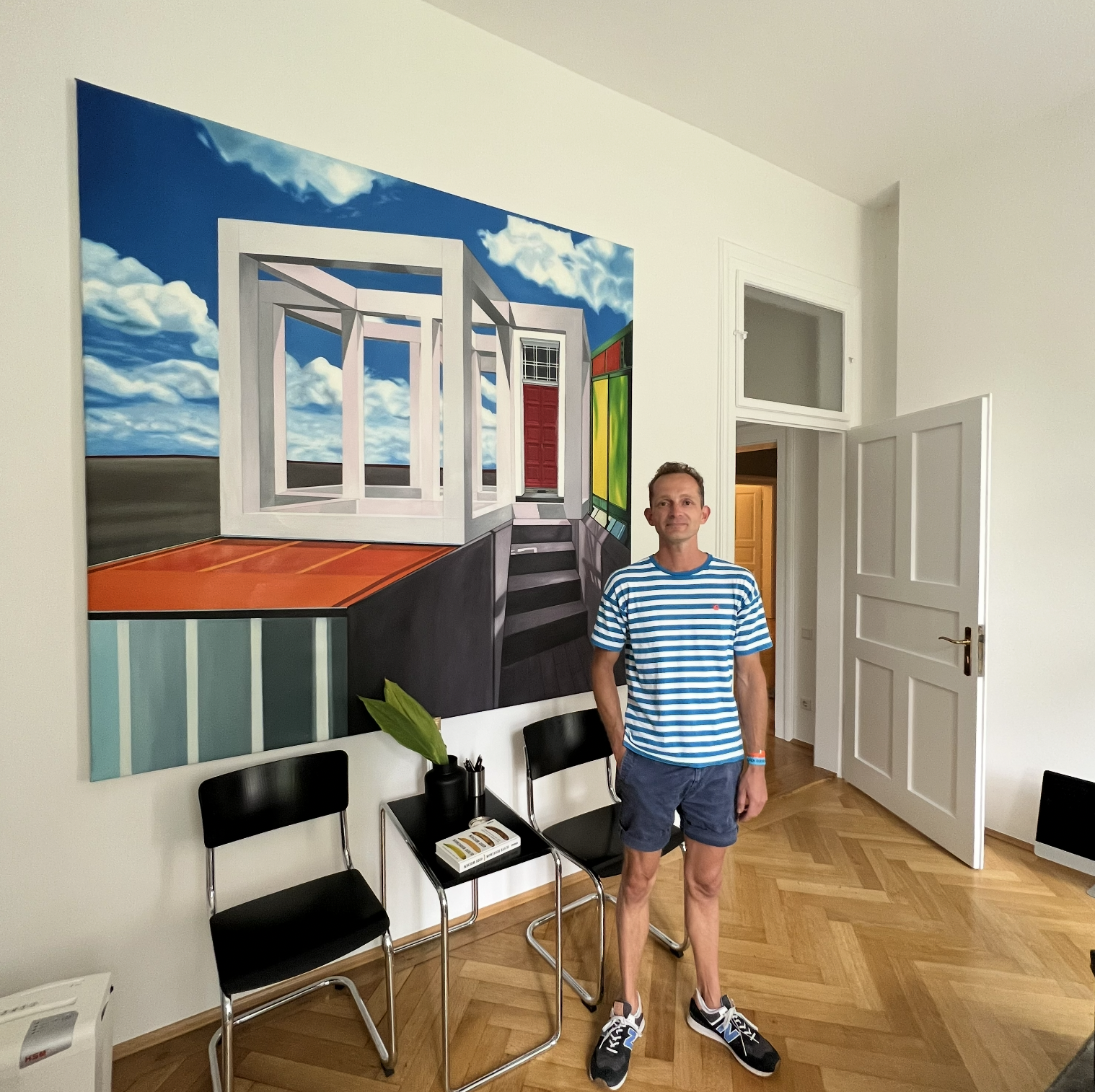
Hill Top House (2026) – Oil on canvas • 200 x 300 cm
HILL TOP HOUSE creates a visual space that bridges architecture, nature, longing, and shelter. The starting point is Taliesin, Frank Lloyd Wright’s estate, and its portrayal in T. C. Boyle’s novel *The Women*.