Nikolaus Kriese
Nikolaus Kriese is a German painter whose artistic practice spans more than three decades. His works range from gestural abstraction to figurative fragments, text, and specific references to architecture, landscape, literature, science, and contemporary culture.
He is less interested in the separation of these realms than in what happens between them. Images, memories, and cultural fragments are detached from their original contexts, superimposed upon one another, and placed in new relationships. This gives rise to open visual spaces without a clear narrative.
Nikolaus Kriese lives and works in Erfurt. His practice includes independent painting as well as site-specific and interdisciplinary projects in both private and public spaces.
On the Autonomy of Artistic Practice
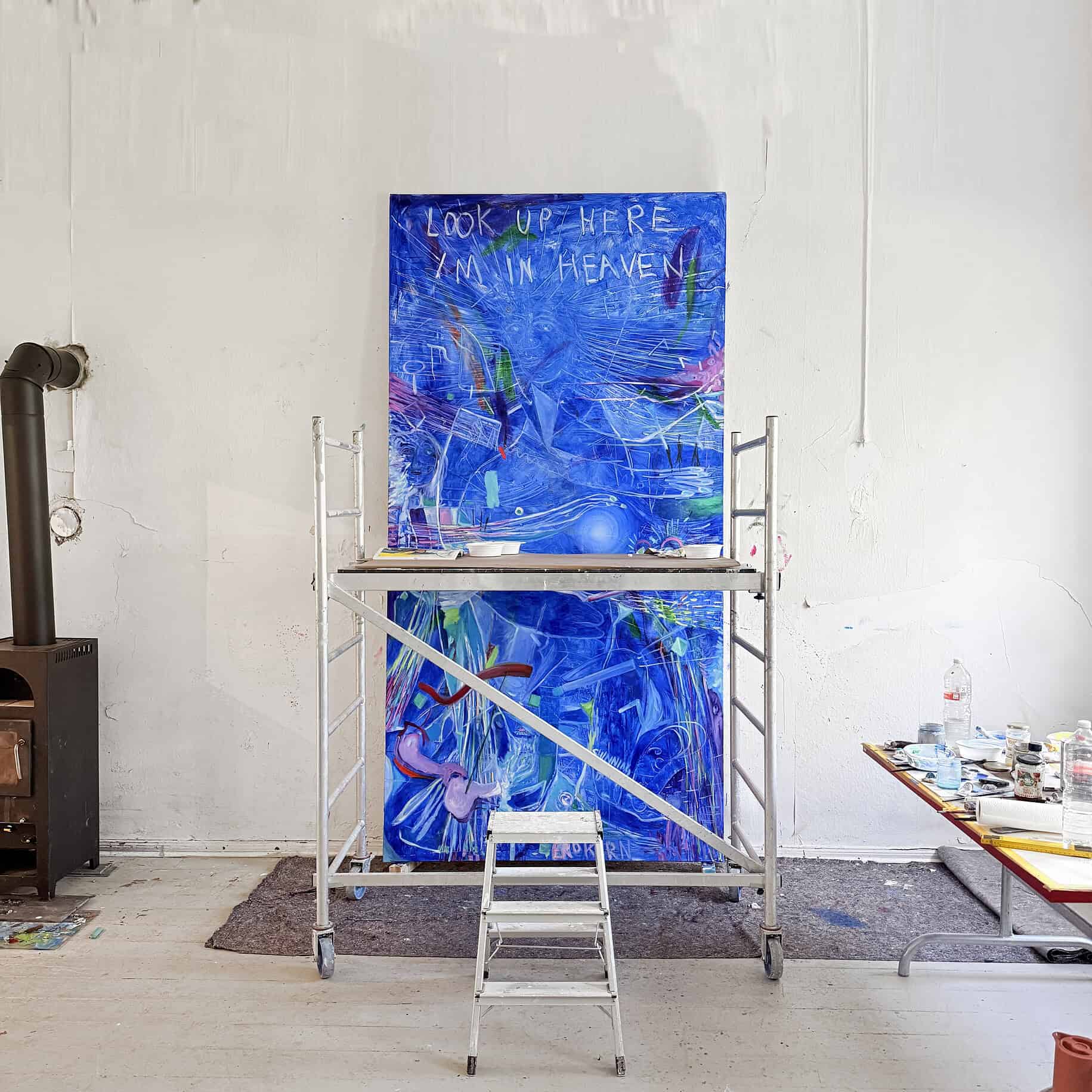
In my artistic practice, I view painting as an independent space for thought and experience. Different perceptions, memories, and cultural references are brought into relation with one another within a single image.
For more than three decades, I have been working with painting as an open system. Gestural abstraction, figurative fragments, text, and references from architecture, landscape, literature, science, and contemporary culture come together. They do not illustrate a predetermined narrative, but rather form new, sometimes contradictory relationships.
Economic systems and the art market are also part of this framework. I am interested in the tension between artistic autonomy and the social and economic structures within which art is created and evaluated.
In this context, autonomy does not mean isolation, but rather the freedom to let materials, experience, knowledge, and intuition interact with one another. Painting thus becomes a process of thinking and feeling—a space in which meaning remains open.

Nikolaus Kriese — Biography
Born in 1982 in Erfurt, Thuringia.
Lives and works in Germany.
Artistic Training
1999–2000 Wettin Art Boarding School, Halle/Saale
2003–2006 Training as a theater painter, theaters in Erfurt and Berlin
Scholarships
2000 Annual Scholarship, Sparkassenstiftung Erfurt
2006 Annual Scholarship, Sparkassenstiftung Erfurt
Current Project Development
2026 The Freedom to Think and Feel — a current series of large-format paintings. Open visual systems connect literature, science, architecture, music, landscape, economics, and personal experience.
Exhibitions — Selection
2013 Kunsthaus Erfurt, Erfurt
2013 Defensionskaserne Erfurt, Erfurt
2012 Now is the only time I know, Villa Haar, Weimar
2012 Thuringian State Parliament, Erfurt
2010 Kunstlawine II, former Ministry of the Interior, Erfurt
2009 Galerie Kneisz, Weimar
2009 Kunstlawine, former Ministry of the Interior, Erfurt
2008 Eberhard Dietzsch Art Prize, Gera
2008 Klub 500, Kunsthaus Erfurt
2007 Villa Hörbiger, Vienna
2007 Sign of Infinity, Galerie Eigenheim, Weimar
2006 Architecture and Living Space, Neuwerk, Erfurt
2006 In the Light, Theater Erfurt
2005 Constructions, Erfurt University Campus
2005 Thuringian Landscapes, Gallery in City Hall, Erfurt
2003 / 2000 Young Thuringian Art, Galerie Vostry, Erfurt
Projects and Assignments — Selection
For many years, in addition to his independent painting, he has been creating numerous artistic projects and commissioned works for private collectors, companies, and institutions both in Germany and abroad.
Selected projects and collaborations with, among others , Siemens Mobility, Huawei / Jung von Matt, ThyssenKrupp Marine Systems, KAUST—King Abdullah University of Science and Technology, Permira, HUGO BOSS, the Archdiocese of Berlin, the Hamburger Kunsthalle, Frankfurt University Hospital, Sparkasse Mittelthüringen, LIDL, Aldi Nord, Institut Montana, Deutschlandfunk, and in the context of Pipilotti Rist.
Other projects were carried out for clients including Ensinger Plastics, Brunata-Metrona, QCore, Rösle, Dr. Suwelack, Werner Companies, Group DF, Centuros, Seaship Cont, JCK Holding, BUGA 2021, and other international clients.
Collections
His works are held in private, institutional, and corporate collections both in Germany and abroad. Since 1995, he has also created several hundred commissioned works for private and institutional clients worldwide.
Media — Selection
Deutschlandfunk — Feature “Is This Still Art or Already Advertising?”, Freistil series.
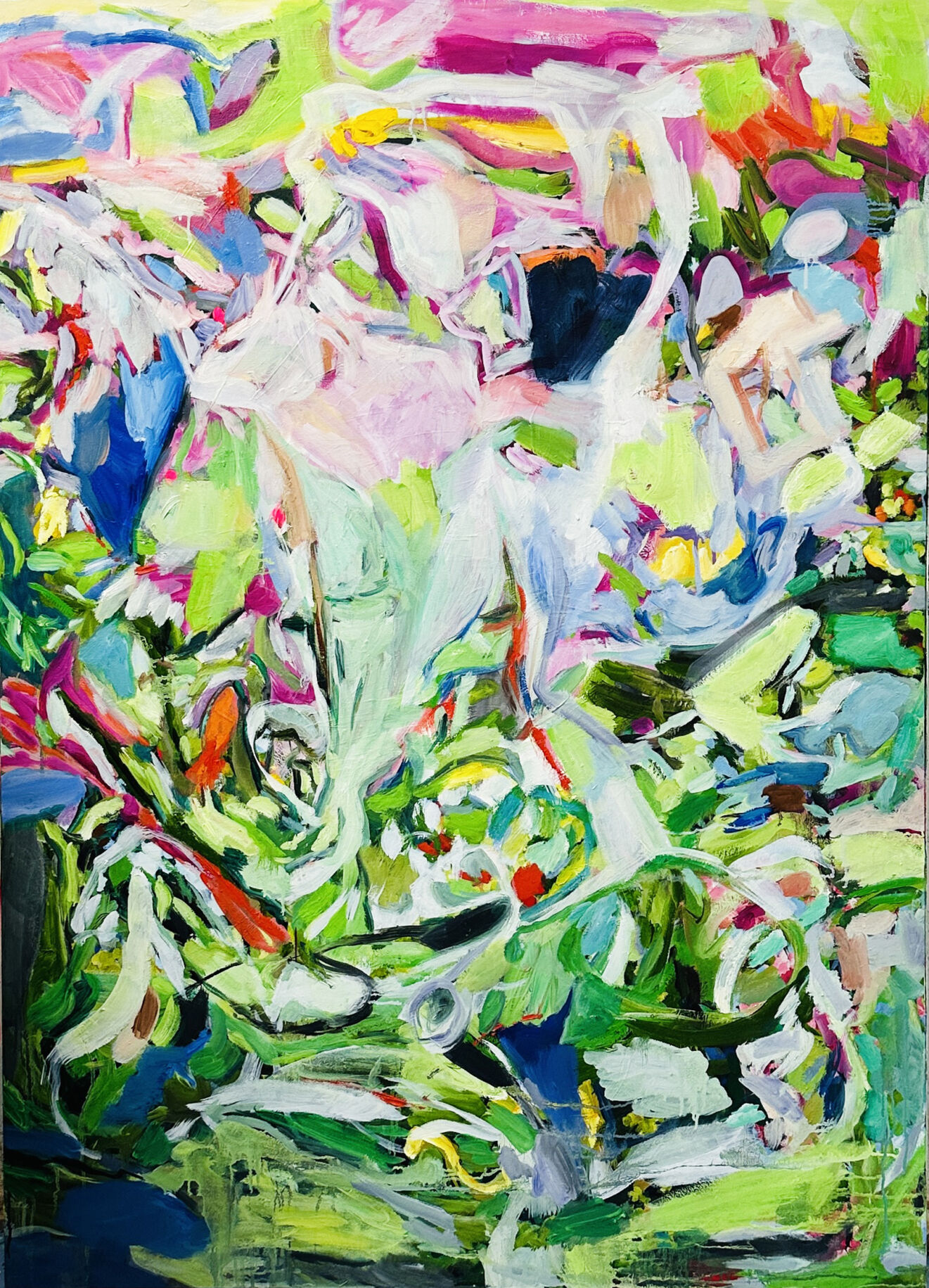
Color, tracing and construction
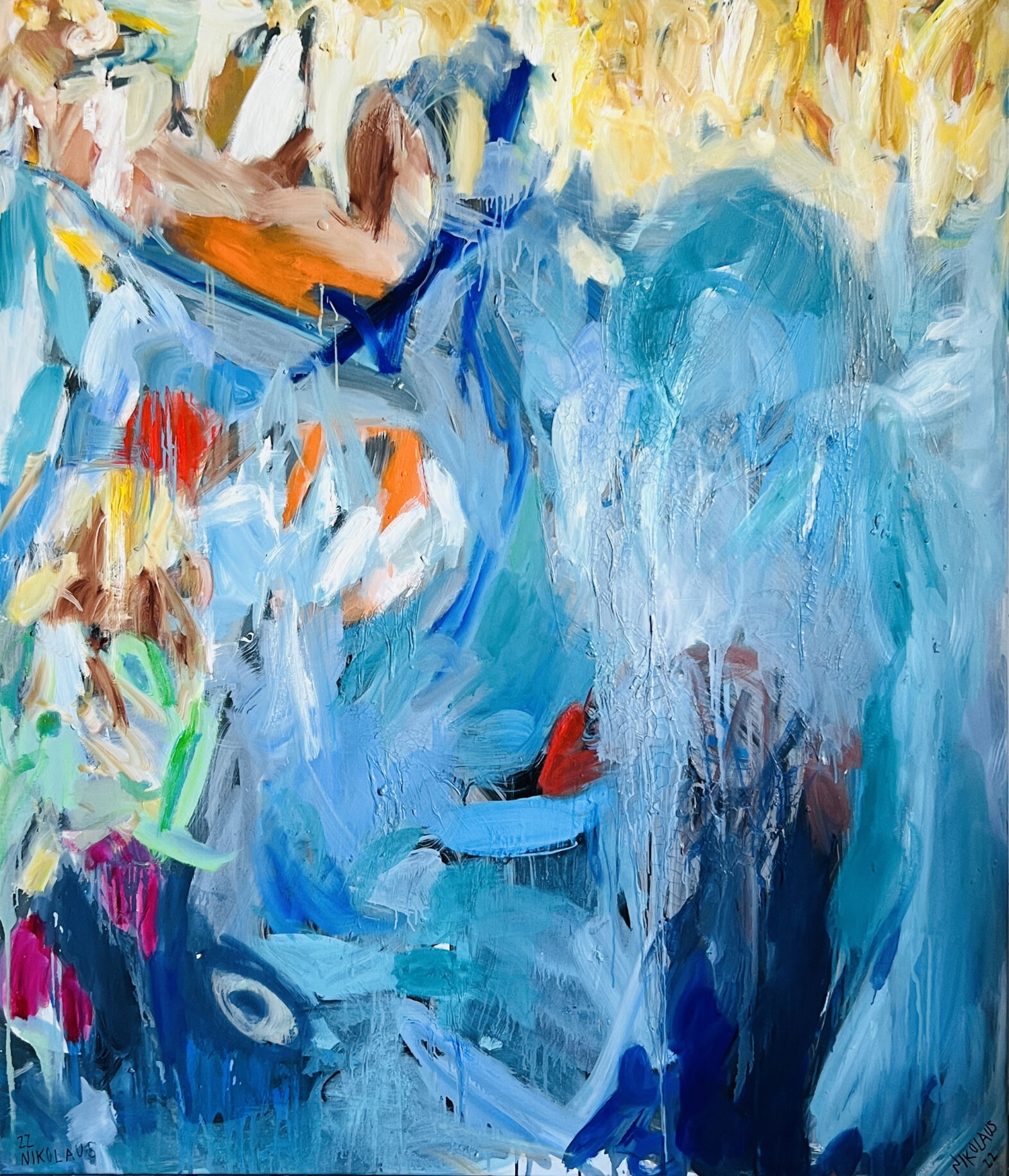
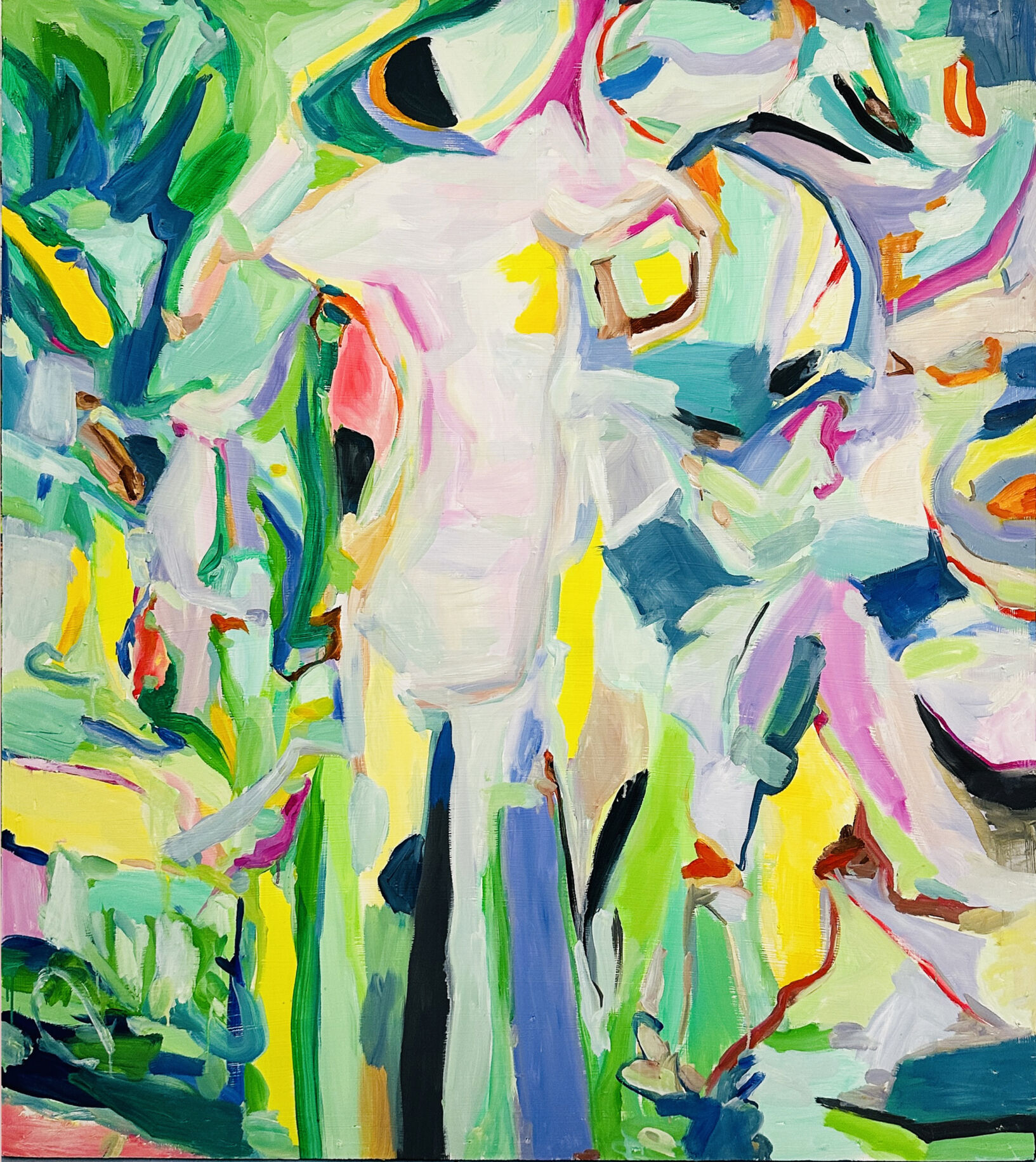
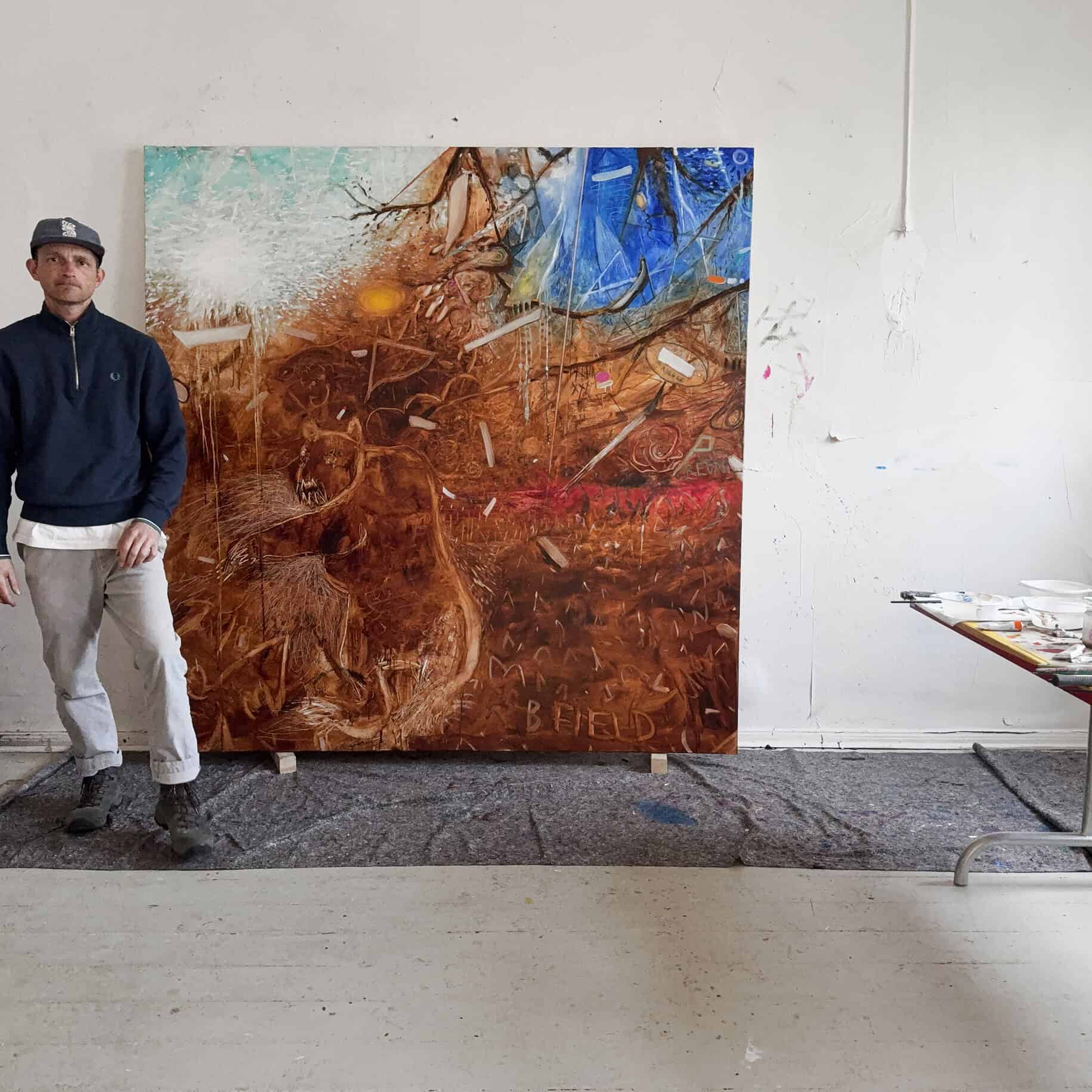
Between clarity, dissonance and free gesture
2002 until today
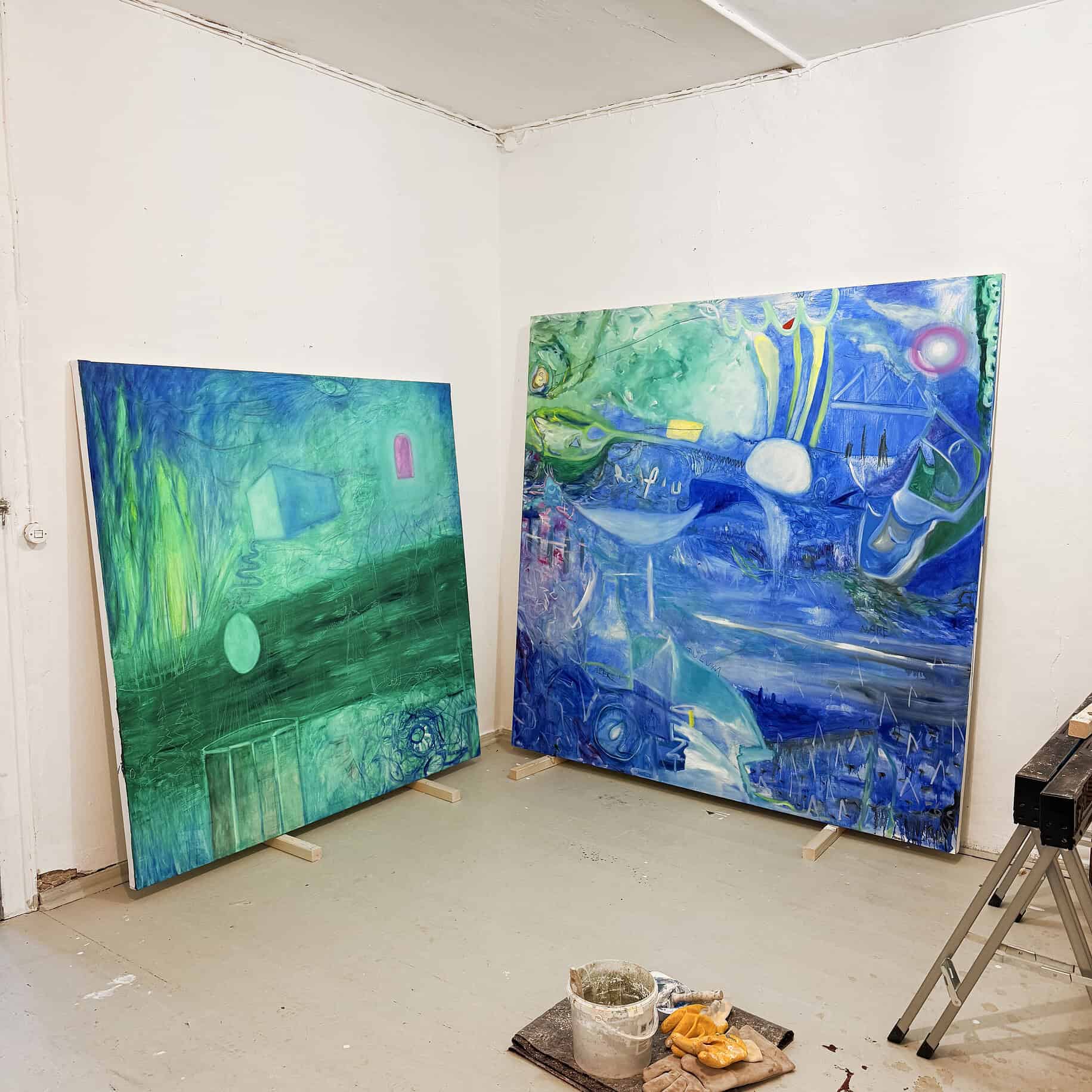
What appears clearly organized and structured does not always fit together harmoniously. In this ongoing work phase, Nikolaus Kriese explores the tensions between order and deviation, between color surface, line and emotion.
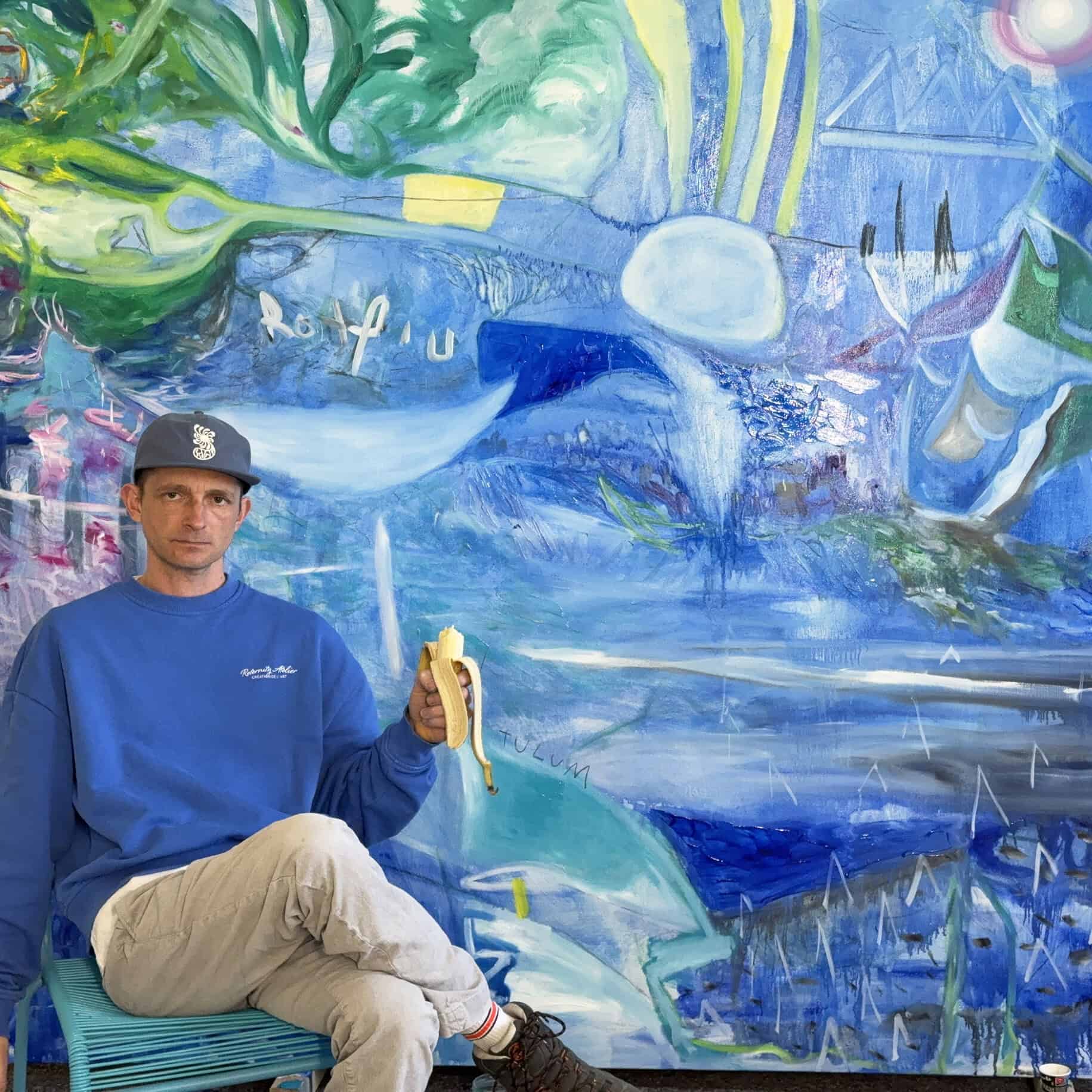
The works are characterized by a lively, often largely abstract colourfulness, with a clearly discernible separation of forms and planes. Again and again, a cool blue dominates, interspersed with dissonant, surprising color contrasts. The picture surfaces appear like fragmented sections of the world or deliberately delimited color field compositions that defy clear classification.
At the same time, many of these works allude to art historical positions from more recent eras - sometimes as a quotation, sometimes as a playful break. The painting technique and use of materials are correspondingly variable. The oil works on canvas in particular display a colorful, impasto materiality that is often expressed in experimental color combinations and layering.
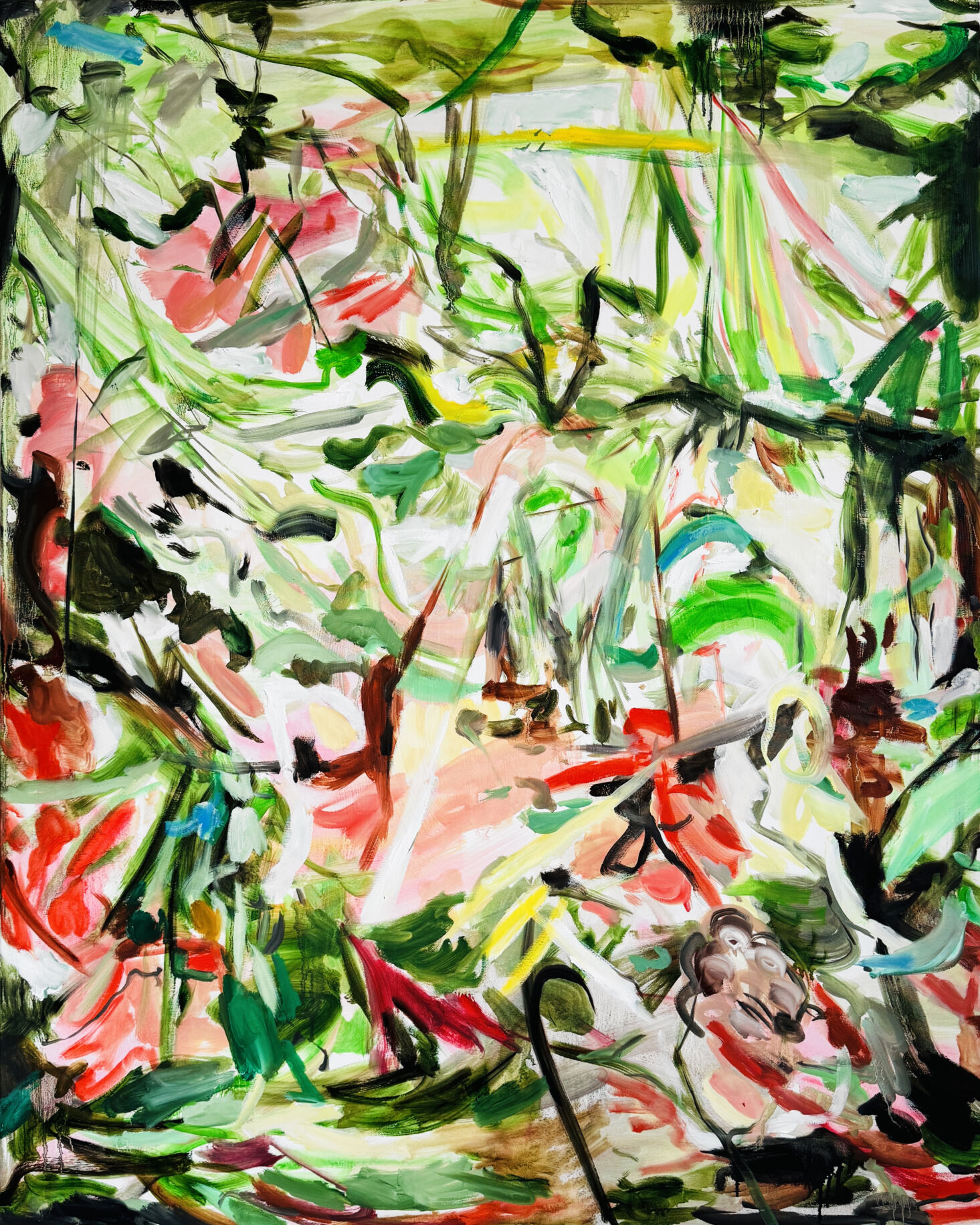
Many works are serial reworkings, painted over, transformed, rethought. They are complemented by expressive drawings, inspired by everyday life, as a visual search for traces in the now. Pure colors, contrasts, open forms and graphic lines meet cosmic plays of color and intuitive image construction.
Here he does not paint according to a concept - but from the moment: as an artist who constantly renegotiates color, form and the present.
Space Architecture & Landscape.
The invention of another reality.
2009-2017
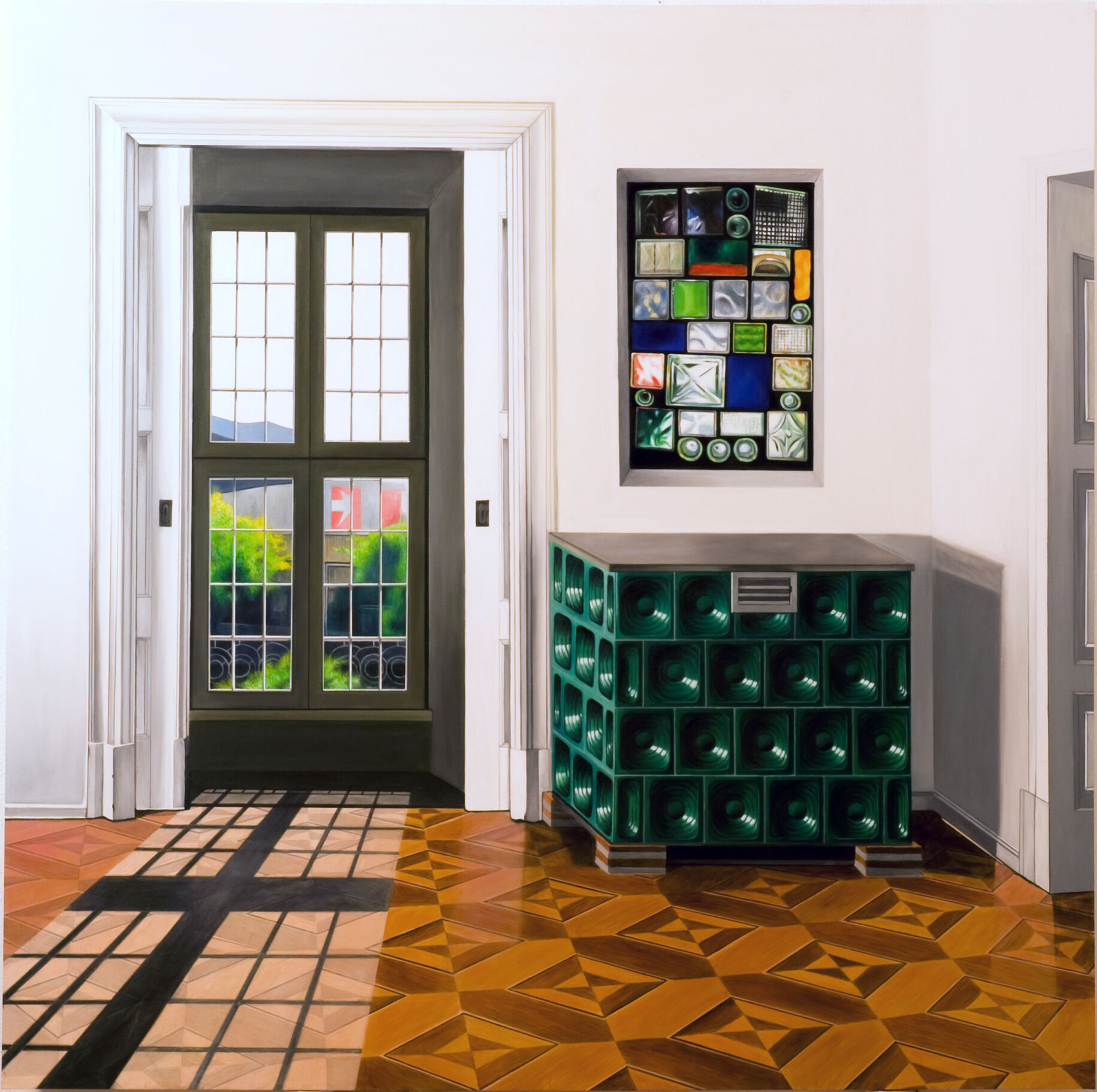
In the creative phase from 2009 to 2017, Nikolaus Kriese's focus was on exploring space, architecture and landscape. It was a time of intensive exploration - not of the visible world, but of its possibilities. The works of these years reinvent reality: in multi-layered pictorial worlds in which naturalistic, modern and traditional views merge into a new whole.
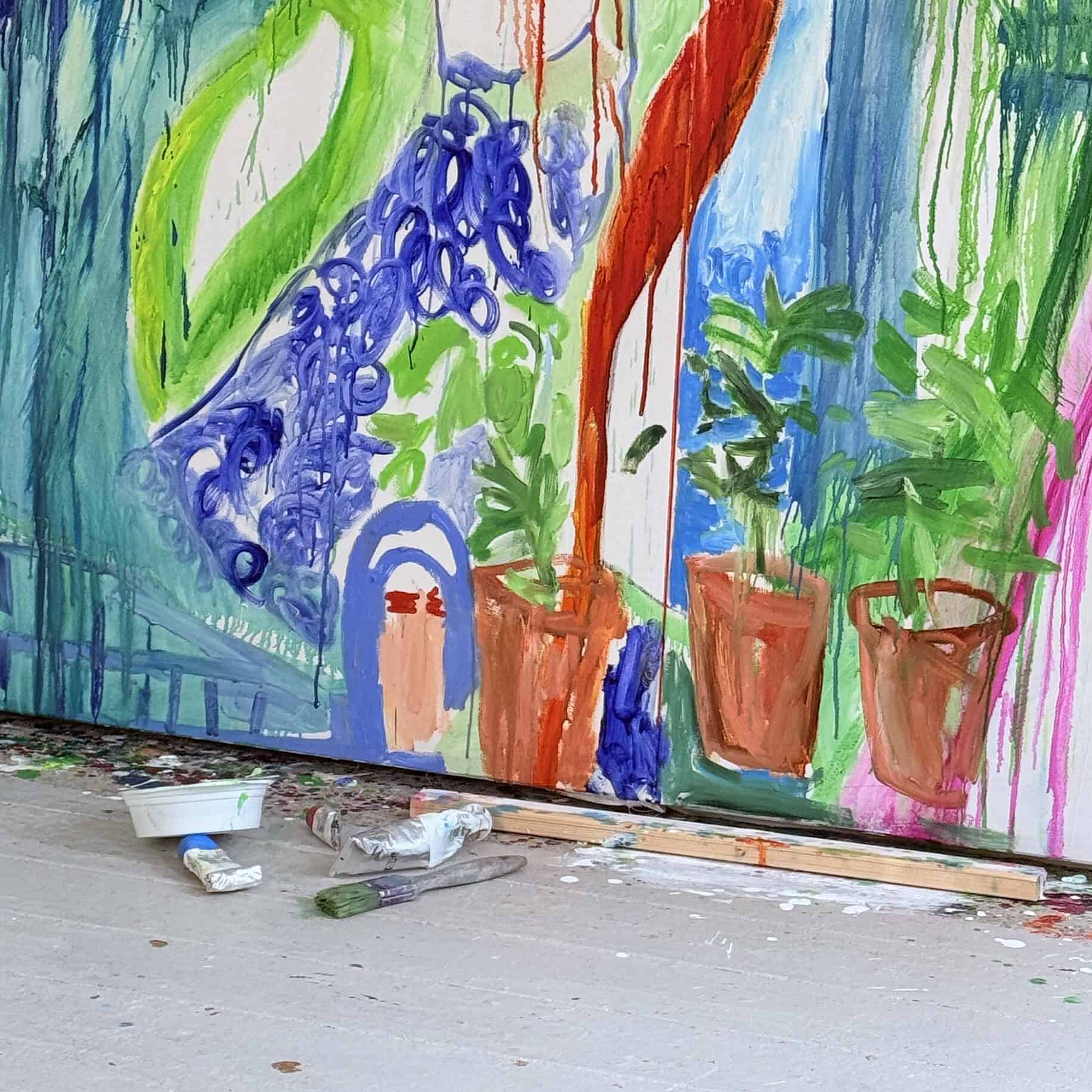
Kriese developed his motifs from everyday encounters - with buildings, interiors, urban structures, objects and landscapes. He transformed these impressions into independent compositions on canvas: realistically structured, colorful and always interpretative.
The combination of multicolored and monochrome surfaces, of representational and expressive elements, created a unique pictorial logic. The clear division of space, object and surface gave rise to pictorial spaces in which the visual remains open - anything is conceivable.
During this phase, Nikolaus Kriese painted with oil and acrylic paints on canvas. The color was usually applied directly - often definitively. Each work follows an inner order in which certain forms or themes are repeated: a quiet seriality that characterizes his style.
The rooms are almost completely deserted - quiet, uninhabited, sometimes cool. Even where plants or objects appear, a certain distance remains. Architecture, everyday objects, fragments of nature appear as independent actors - precisely composed, often in large format.
This phase shows an artist who does not depict but rethinks, who does not illustrate but makes visible. His painting remains open - and consistently beyond the mainstream.
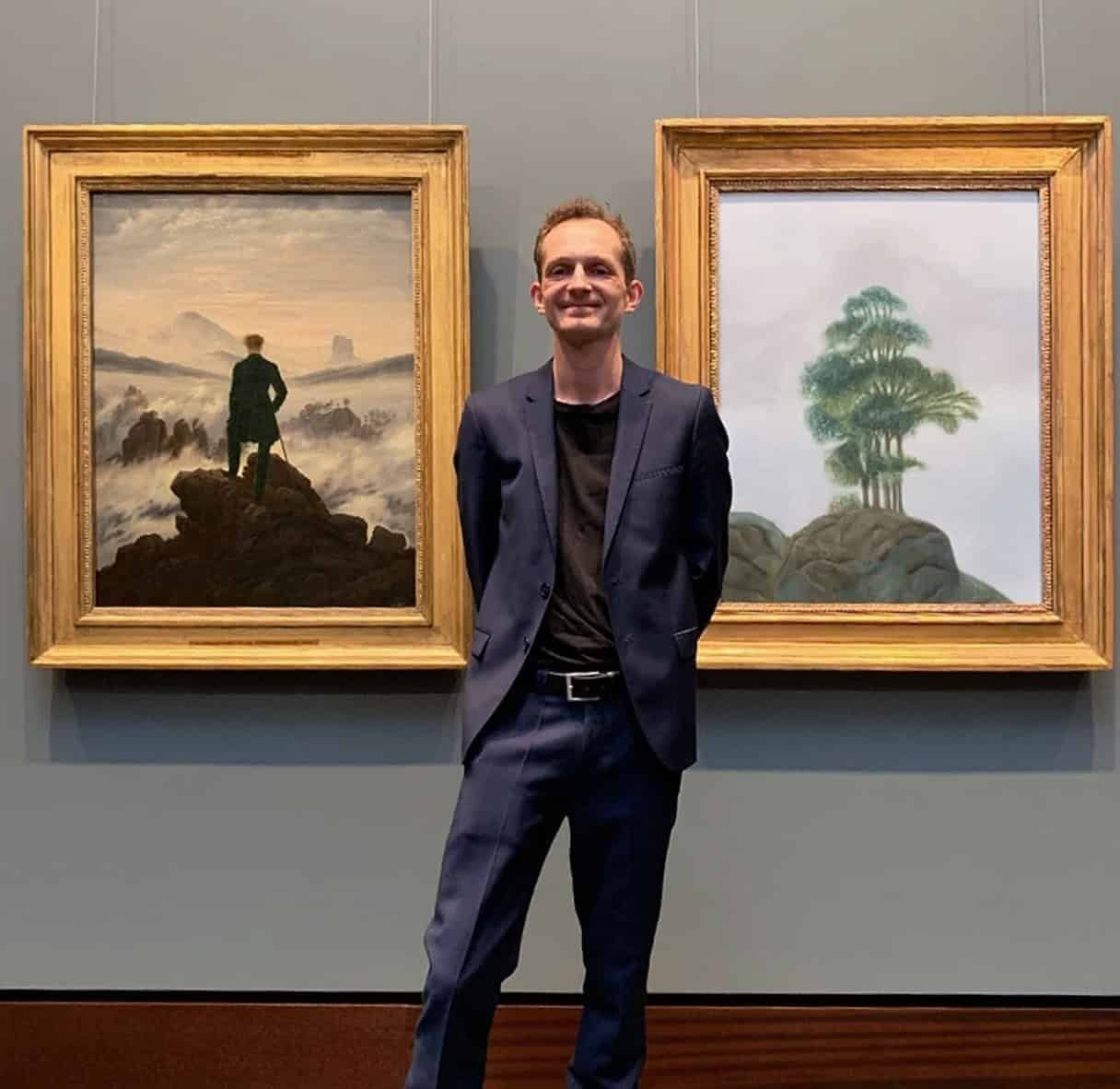
Commissioned painting based on Caspar David Friedrich. Advertising film for Huawei, produced by Jung von Matt at Atelier Nikolaus Kriese and the Hamburger Kunsthalle, 2019.
The world as a construction kit
Collage-like image stagings between architecture and imagination
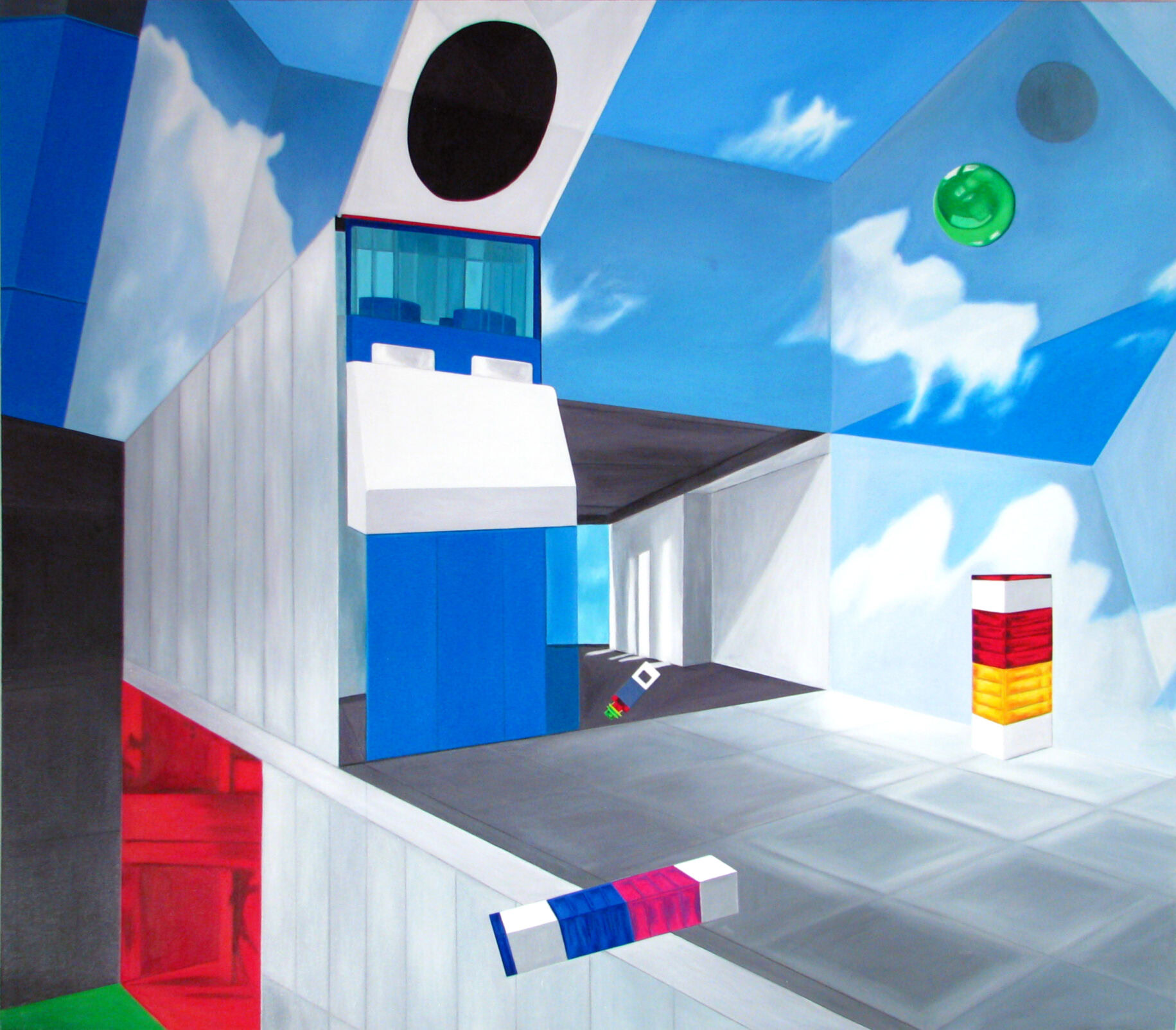
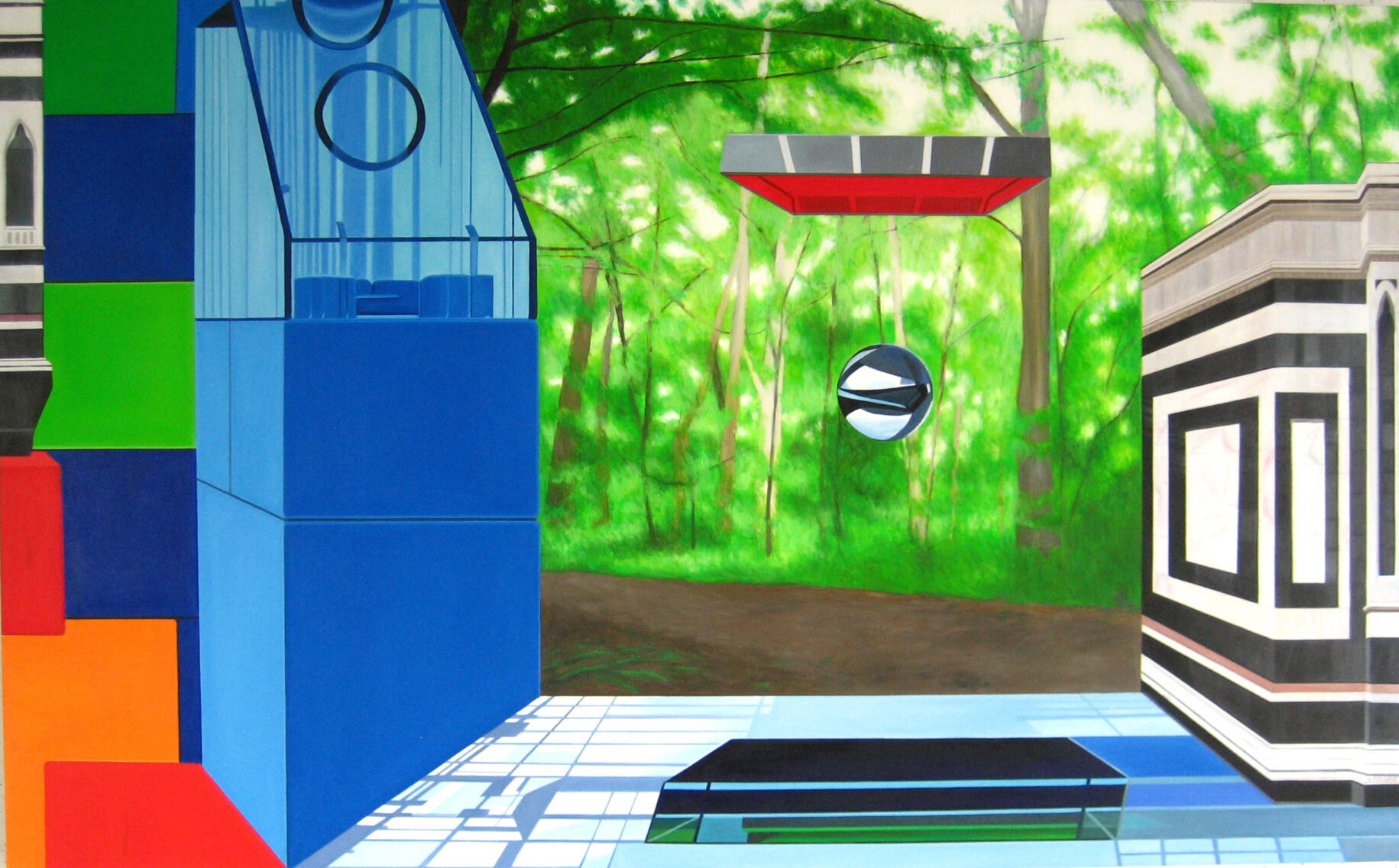
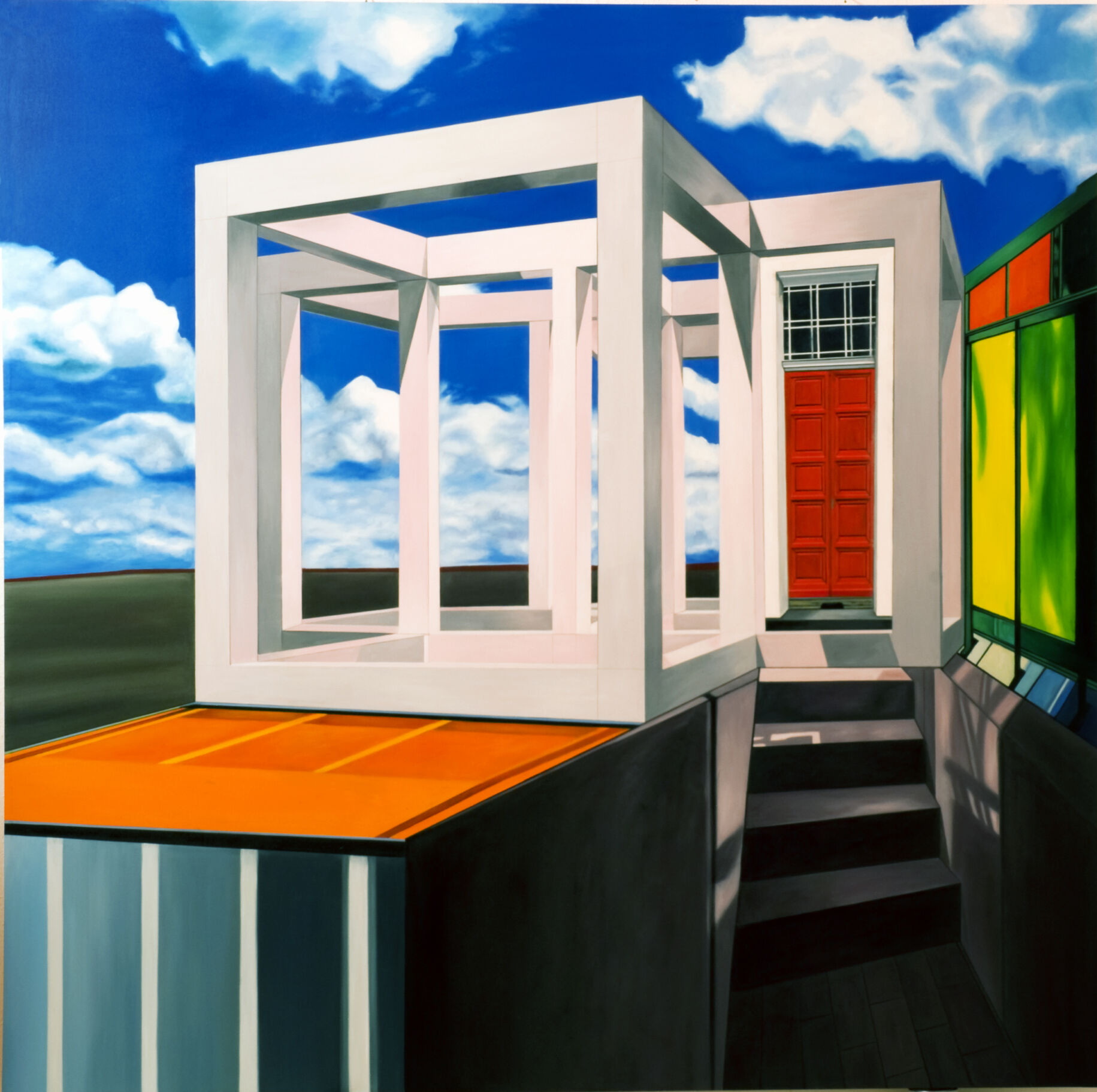
In many of Nikolaus Kriese's works, the world is transformed into a visual construction kit: spaces, objects and landscapes are recombined - not by chance, but as a conscious construction of a different reality.
The combination of real existing elements creates new contexts. For example, when photorealistic architecture suddenly appears in intensely colored landscapes or carefully painted objects become legible as artificially inserted elements. These are pictorial worlds that read like collages, but are staged on the canvas with painterly precision.
Quite a few of these pictures are like nature: they don't ask questions - but they do provide answers. Kriese opens up new spaces with his compositions: flying objects, children's toys, stairways, glimpses, passages, doors to another dimension. New worlds emerge against a familiar backdrop.
Stylistically, the work is characterized by strong colour contrasts, a clear architectural structure and naturalistic attention to detail. Whether closed shutters, deserted offices or meticulously drawn lines - everything appears deliberately placed and at the same time mysterious. The rooms often appear deserted, large-scale, slightly gloomy and imbued with a quiet mysticism.
Kriese gives his pictures little white space, but plenty of room for interpretation and atmosphere. The penchant for detail, the combination of structure and the surreal - all this makes his art an invitation: not just to see, but to experience.
Pure colors
Color as material, emotion, explosion
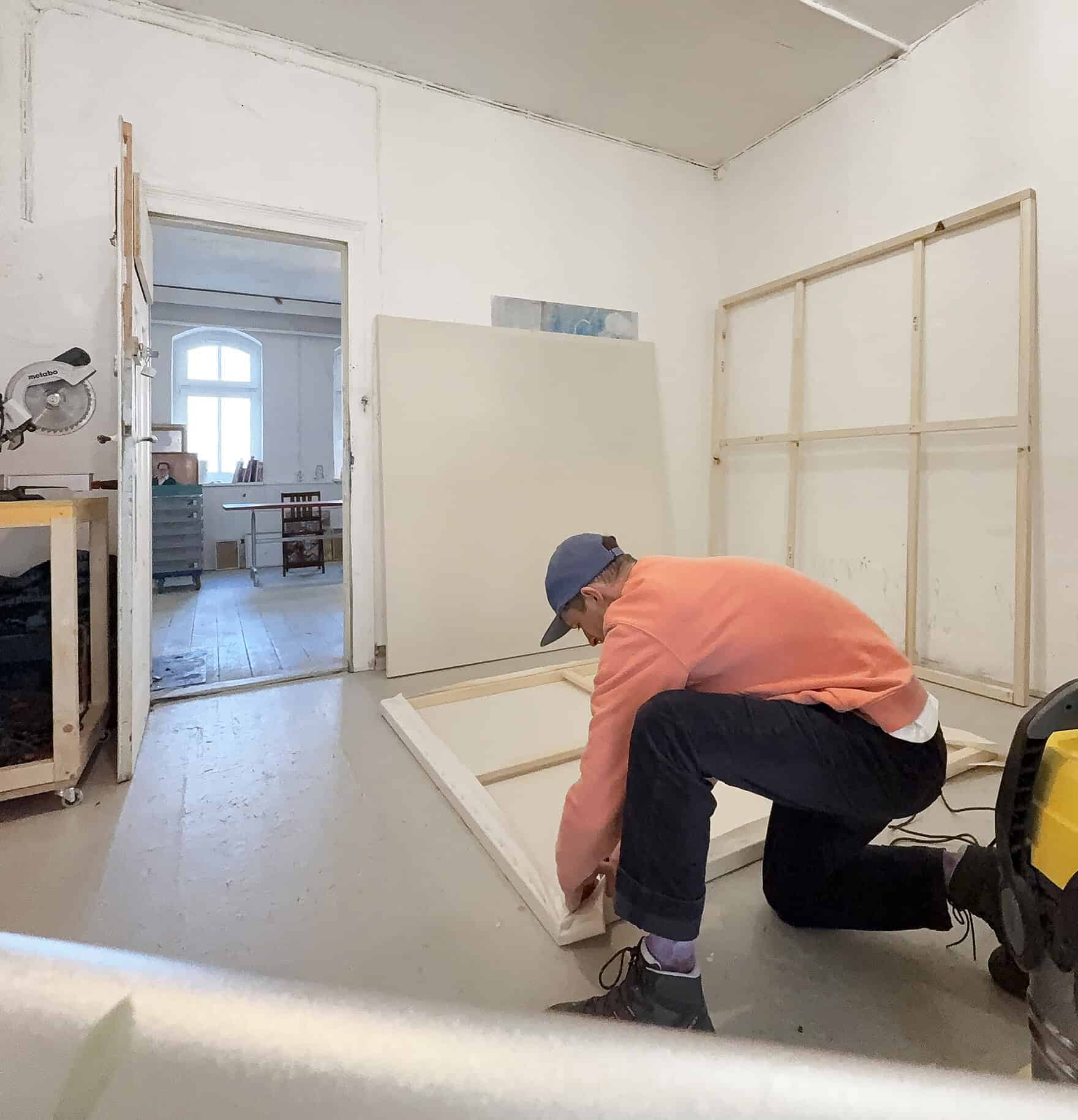
This series of works focuses on pure, intense colors - both as a material and as an expression. Powerful compositions are created on handmade frames, in which free-form gestures, putty, pigment and oil paint combine to create a colorful orchestration. The paintings come alive through their materiality - impasto, built up in layers, almost corporeal.
Pigments are mixed, smoothed, mixed with oil and raised to their highest luminosity. The colored surfaces interact directly with each other, reacting, repelling or attracting each other. It is a dialog from surface to surface, from color to color - raw, playful, expressive.
The motifs are created in the work process itself. Spontaneity and structure, emotional gesture and objective restraint meet here. These pictures show a world in which color itself becomes a motif - as an energetic force, as a mood, as a possibility.
New spaces open up between the expressive power of color and controlled composition. A playful, almost fairytale-like dimension emerges - with echoes of nature, of forest landscapes, of a mystical outside. Yet the works remain abstract - they build bridges to reality without imitating it.
These images do not demand anything - but they do challenge.


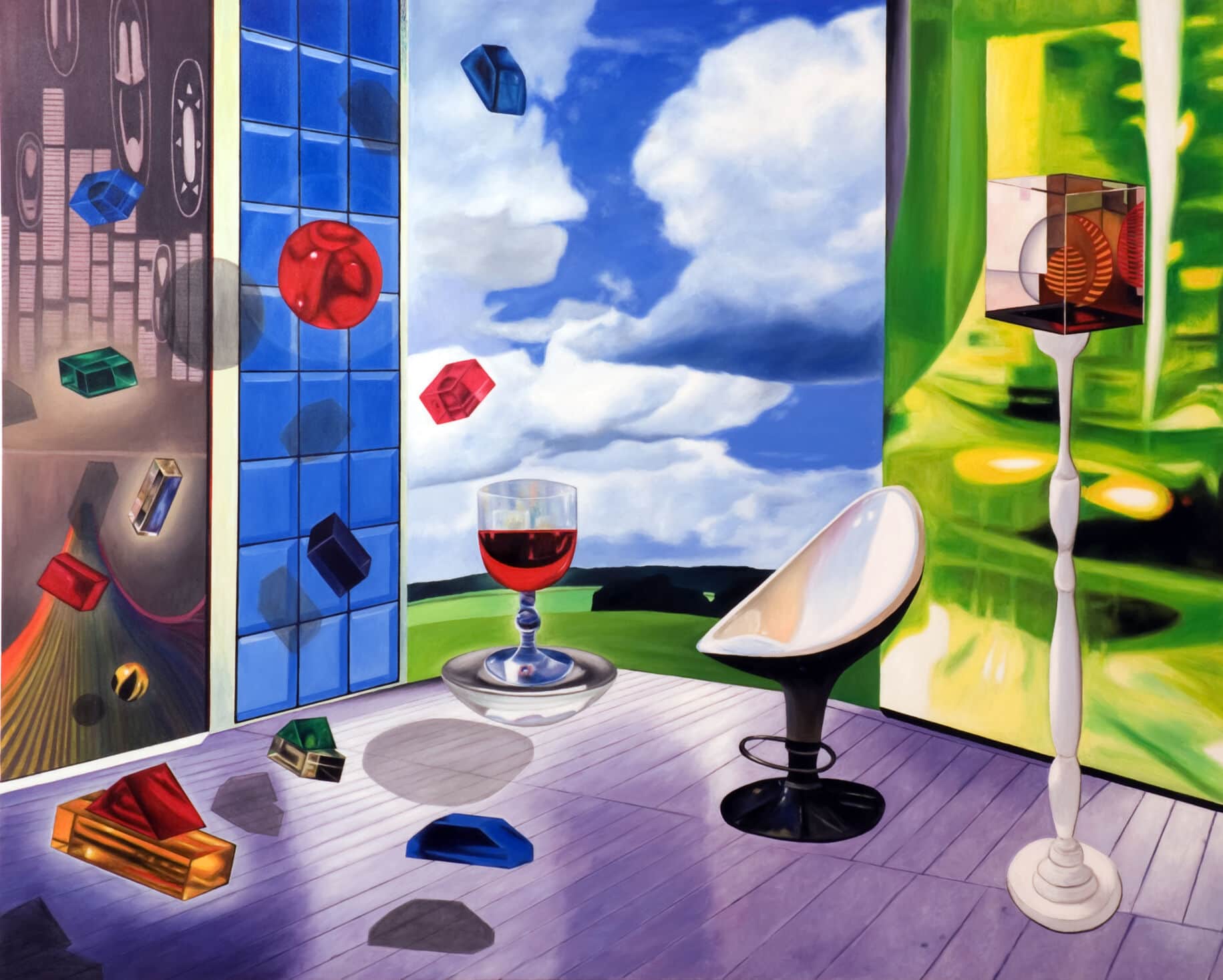
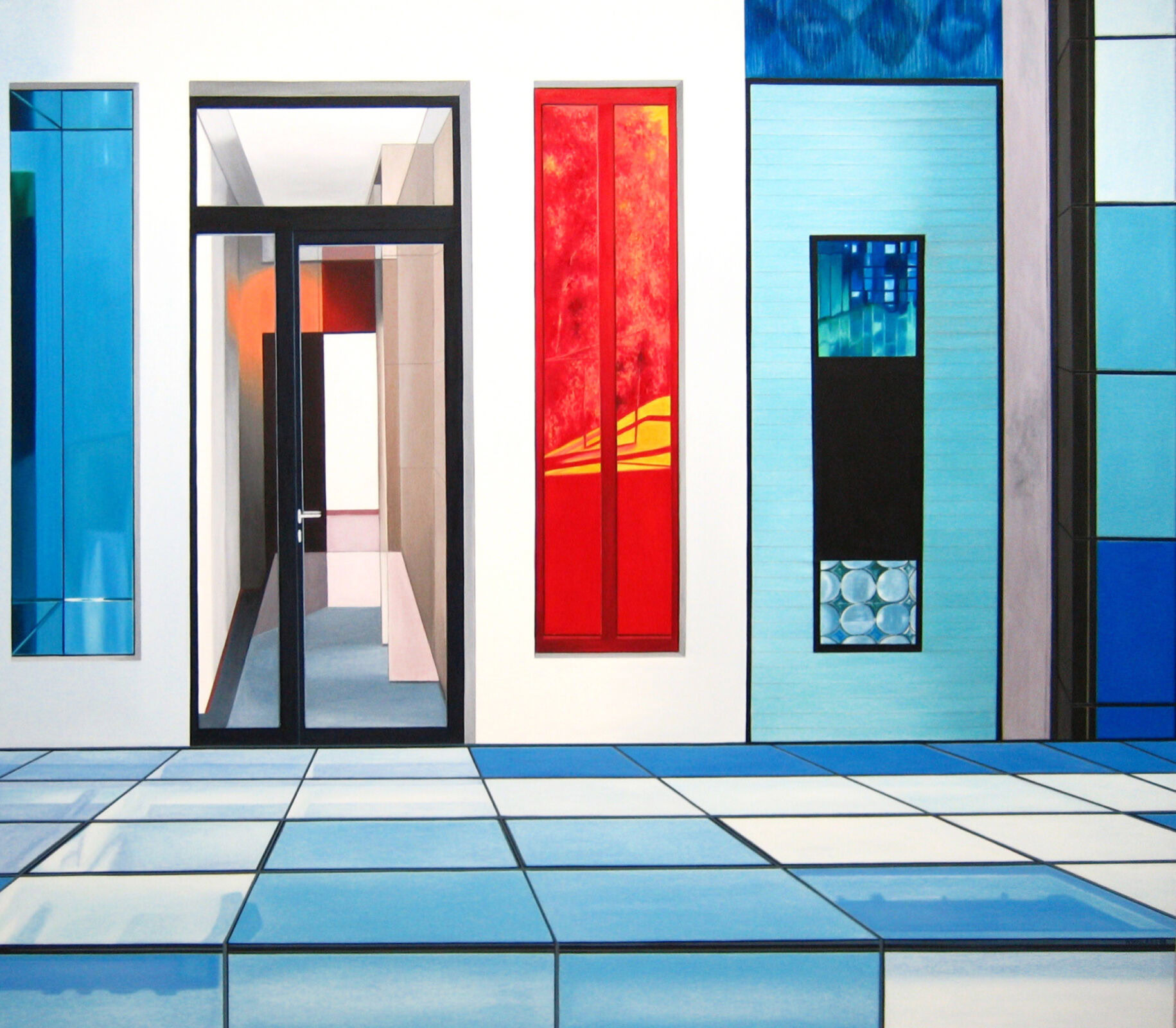
Crystal clear constructed reality
Spaces of light, line and imagination
2007-2016
What places do we carry within us? When does imagination become space? And when does this space become real?
The works from 2009 to 2019 are dedicated to these questions - with a focus on transparency, construction and composition. Glass is at the center: glass bricks, bottles, windows, marbles, glasses, gemstones - translucent materials that reflect light and provide structure at the same time. In some pictures, a small windmill can be seen - almost lost - on the horizon.
The pictorial architecture is precisely geometric, often almost technical. Red surfaces set accents in a predominantly bluish color space. Some works open up to the open landscape, others create artificial spaces. But the composition always remains controlled, the structure clearly conceived - a play with order and surface.
The sky plays a central role in many of these pictures. Objects appear to float, often removed from their physical gravity. The result is an impression of weightlessness, of rapture. The forms remain cool, almost sterile - a visual language reminiscent of New Objectivity, but at the same time deeply metaphorical.
The works create zones of imagination: places of retreat, mental landscapes, spaces for fantasy. They open up new dimensions - as inner architecture as well as playful construction. The world appears here as a construction kit: open to variation, characterized by structure - and carried by a quiet, crystal-clear mystery.
Quiet places
Architecture, Memory, and the Question of Home
2003–2007
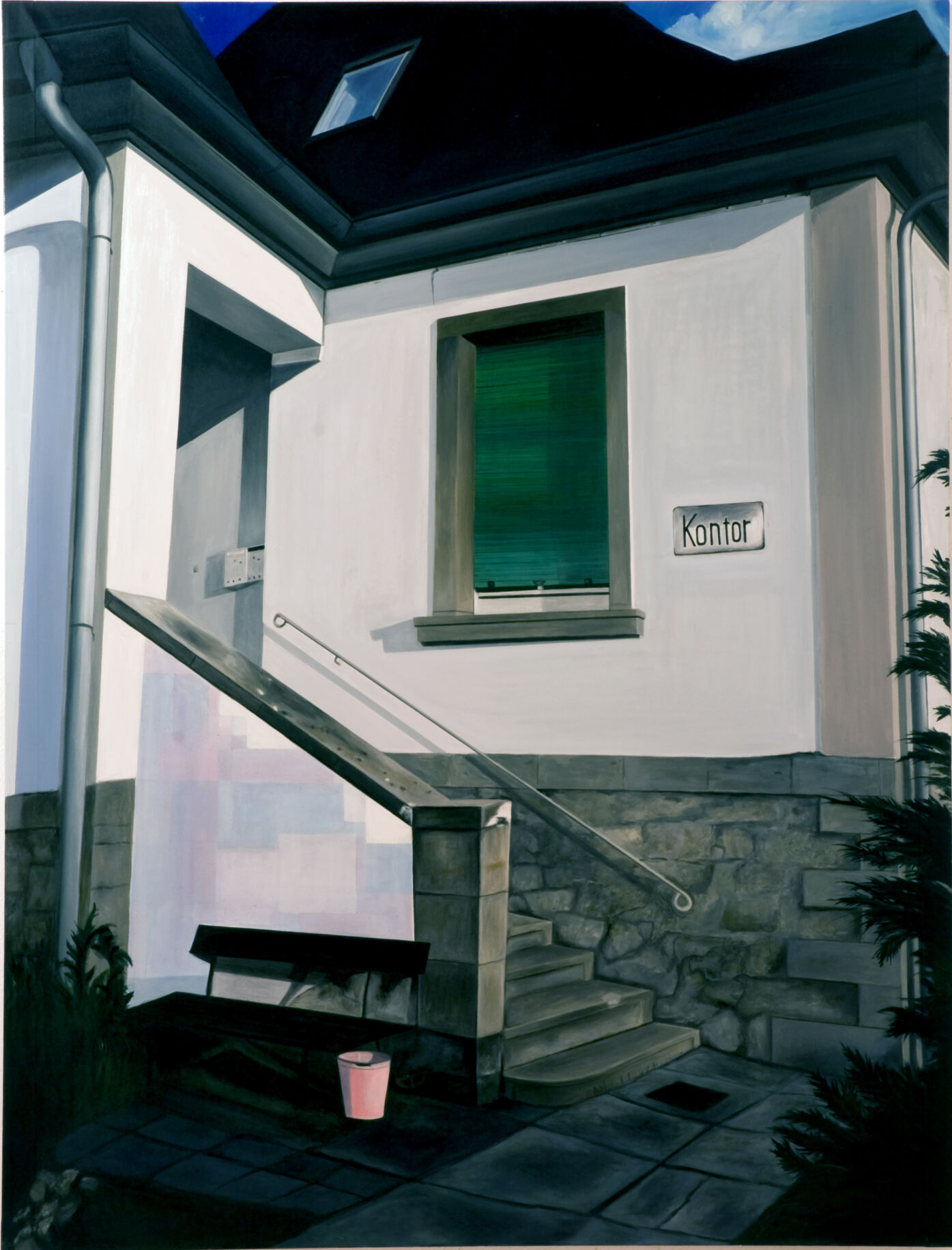
Places without people. But full of history. In this phase of his work, the artist Nikolaus Kriese devotes himself to the quiet presence of traditional architecture in expressive landscape spaces - rooted in the Thuringian Forest, in meadows, light and memory.
It's about feelings of home, about the question: Where is what we call home? When we drive out, through villages, forests, fields - when are we really there? What remains when people are no longer to be seen, but their traces remain visible?
The works from these years show village house facades, courtyards flooded with light, abandoned houses, windows and doors - silent witnesses to a harmonious, almost idealized reality. Architecture is shown here not only as a structure, but as a carrier of stories, as a perspective on real life.
With open colors, clear compositions and a penchant for atmospheric calm, he creates contemporary documents - images that are not loud, but resonate for a long time.
These works open our eyes to the familiar - and leave room for our own memories. Quiet places - not past, but preserved in color, form and light.